Do Heart Health Supplements Actually Work? An Honest Look at the Evidence (2026)
A Note Before You Read This
This article examines published research on heart health supplements for informational and educational purposes only. It does not constitute medical advice, and it does not substitute for professional medical care.
Heart disease is a serious condition. Doctors manage it through medical diagnosis, prescribed treatment, and lifestyle change. No supplement reviewed in this article has proven it can prevent heart attacks, strokes, or treat diagnosed cardiovascular disease. If you have a diagnosed heart condition, high blood pressure, or take any cardiovascular medication, please speak with your doctor before starting any new supplement.
With that established, here is an honest assessment of what the evidence actually shows.
The Honest Starting Point: Why This Question Is Harder Than It Looks
“Do heart health supplements work?” sounds like a simple question. It isn’t, for two reasons, that shape everything that follows.
First: “Work” means different things in different contexts. Do heart supplements produce measurable changes in specific biochemical markers (triglycerides, CoQ10 levels, inflammatory proteins)? Often, yes. Do they reduce the risk of heart attacks and strokes in the general population at typical supplement doses? The evidence runs considerably weaker. For most specific claims, the honest answer is: not meaningfully, or at least not proven.
Second: “Heart health supplements” is not a single category with a unified evidence base. CoQ10, Omega-3 fish oil, magnesium, herbal cardiovascular formulas, and beetroot extract all appear under this umbrella. Each carries different mechanisms, different research histories, and dramatically different levels of supporting evidence.
The rest of this article works through that evidence category by category, neither dismissing supplements wholesale nor overselling what the research actually supports.
Category 1: Omega-3 Fish Oil – The Most Researched and the Most Complicated
What the research actually shows
Omega-3 fatty acids – specifically EPA and DHA from fish oil – probably represent the most extensively studied class of cardiovascular supplements. Researchers have subjected them to dozens of large randomised controlled trials, multiple meta-analyses, and sustained scientific attention for over three decades.
Here is what that research actually shows, separated from what the marketing typically claims.
What is well-established:
Triglyceride reduction is the most consistent and replicated finding in Omega-3 research. Multiple trials confirm that adequate doses of EPA+DHA (typically 2-4g daily in clinical studies) produce meaningful reductions in circulating triglycerides, a blood lipid marker associated with cardiovascular risk. This effect is dose-dependent, consistently observed across diverse populations, and accepted by major medical bodies including the American Heart Association (for elevated triglycerides specifically).
Anti-inflammatory effects have a plausible mechanistic basis. EPA and DHA compete with Omega-6 fatty acids in producing eicosanoid signalling molecules, shifting the balance toward anti-inflammatory pathways. This mechanism is well-understood at the molecular level, though translation into clinically meaningful cardiovascular outcome improvements at typical supplement doses is less certain.
What is much weaker than marketed:
Heart attack and stroke prevention in general populations is the claim most prominently associated with fish oil supplements in marketing and popular health media. It is also the claim with the most contested evidence. Johns Hopkins Medicine has explicitly stated that no substantial proof exists for fish oil supplements preventing heart attacks or strokes in the general population at typical over-the-counter doses.
Several large, well-designed trials have produced mixed or null results:
The VITAL trial (2019, New England Journal of Medicine) enrolled 25,871 participants and randomised them to 1g/day Omega-3 vs placebo. It found no significant reduction in major cardiovascular events overall, though subgroup analyses suggested possible benefit in people who don’t regularly eat fish.
The ORIGIN trial found that Omega-3 supplementation at 1g/day did not reduce cardiovascular outcomes in people with dysglycaemia (prediabetes or diabetes).
ASCEND (2018) found that 1g/day Omega-3 did not significantly reduce non-fatal MI, non-fatal stroke, or cardiovascular death in diabetic patients without established cardiovascular disease.
In contrast, the REDUCE-IT trial found large reductions in cardiovascular events with 4g/day of highly purified EPA (icosapentaenoic acid, as prescription Vascepa). However, this is a high-dose, pharmaceutical-grade, prescription product, not an over-the-counter supplement. Its mechanism may also partly relate to displacing other lipids in cell membranes rather than reflecting the general Omega-3 effect.
The honest summary: Omega-3’s evidence is strongest for triglyceride reduction at higher doses. Its evidence for preventing heart attacks in general-population supplement users at typical OTC doses (300-600mg EPA+DHA per capsule) is considerably weaker than most fish oil marketing implies. These are not the same claim.
Category 2: CoQ10 – Specific Use Cases With Reasonable Evidence, Weaker General Claims
What the research actually shows
CoQ10 has a well-established role in cellular energy production. It forms a component of the mitochondrial electron transport chain that drives ATP synthesis. Its cardiovascular relevance stems from the particularly high mitochondrial density of cardiac muscle tissue.
What is reasonably well-supported:
Statin-associated CoQ10 depletion represents one of the strongest specific rationales for supplementation. Statins, widely prescribed for high cholesterol, inhibit HMG-CoA reductase, an enzyme whose product serves as a precursor to both cholesterol and CoQ10. This pharmacological side effect means statin use reduces the body’s endogenous CoQ10 production. Research consistently confirms this depletion. Whether CoQ10 supplementation reliably reverses statin-associated muscle symptoms (myalgia, fatigue, weakness) is more debated: some trials show benefit, others do not. The rationale is mechanistically grounded, however, and supplementation is generally considered safe.
Heart failure as an adjunct shows more clinically substantive evidence. The Q-SYMBIO trial (JACC: Heart Failure, 2014) examined CoQ10 as adjunctive therapy in chronic heart failure. It found significant reductions in major adverse cardiovascular events (31% reduction), cardiovascular mortality, and all-cause mortality compared to placebo over two years. This is a stronger finding than most supplement research produces, though it applies specifically to diagnosed heart failure patients already on standard medical treatment, not to generally healthy people seeking primary prevention.
Modest blood pressure support has some backing. A meta-analysis of 12 trials published in the Journal of Human Hypertension found that CoQ10 supplementation correlated with average systolic reductions of about 11 mmHg and diastolic reductions of about 7 mmHg. These are modest but non-trivial effects, comparable in magnitude to some lifestyle interventions, though individual variation was considerable.
What is less established:
The general claim that CoQ10 “prevents heart disease” or “protects the heart” in healthy people without specific deficiency or diagnosed conditions has considerably less support than the specific use cases above. Its value in healthy adults who are not on statins, do not have heart failure, and carry normal-range CoQ10 levels is less clearly evidenced.
The honest summary: CoQ10’s evidence is most compelling and specific for statin-associated depletion and as an adjunct in diagnosed heart failure management. Both contexts involve medical supervision. Its blood-pressure-adjacent evidence is modest. Its general “heart protection” marketing in healthy people has weaker support.
Category 3: Herbal and Botanical Cardiovascular Formulas
What the research actually shows
This is the category where the gap between traditional use history and clinical evidence runs widest, and where supplement marketing warrants the most scrutiny.
India has a rich tradition of botanical medicine with a long history of use in cardiovascular contexts. Arjuna bark (Terminalia arjuna), Guggul, Ashwagandha, and Garlic extract are among the most widely cited. The evidence picture for each is mixed.
Garlic extract has produced modest reductions in blood pressure and some lipid markers in multiple studies, though effect sizes are generally small and study quality varies.
Terminalia arjuna has been studied in Indian clinical trials for heart failure and angina, with some positive findings. However, study populations are small and methodological quality is variable relative to large pharmaceutical trials.
Guggul (Commiphora mukul) has traditional use for lipid management, but controlled trials have produced inconsistent and sometimes null results.
The honest summary for this category: Traditional use is not the same as clinical trial evidence. Many herbal cardiovascular compounds have plausible mechanisms and long histories of use, but their clinical evidence base is far thinner and less consistent than their marketing typically implies. Herbal cardiovascular formulas marketed as “supporting” normal-range blood pressure and cholesterol levels in generally healthy adults, framed as proactive wellness additions alongside diet and lifestyle, represent a legitimate and honest positioning. Claims of treating or preventing cardiovascular disease from herbal supplements are not supported by the available evidence.
Where Marketing Has Outrun the Science: Common Claims to Scrutinise
If you regularly encounter any of the following claim types in Indian supplement marketing for heart health products, treat them with appropriate scepticism.
“Clinically proven to reduce heart attack risk” – No OTC supplement has clinical trial evidence at standard doses sufficient to support this specific claim.
“Reverses arterial blockage” – No supplement has evidence for this. Atherosclerotic plaque reversal requires specific medical intervention.
“Lowers cholesterol naturally” – Specific compounds have produced modest lipid effects in some studies. None have evidence comparable to statins for LDL reduction, and “natural” does not mean proven effective.
“Your doctor doesn’t want you to know about this” – A reliable red flag regardless of category. Legitimate supplements with genuine evidence appear openly in medical literature and mainstream medical organisation guidance.
“Approved by cardiologists” – Endorsement by any individual physician or vague professional reference is not equivalent to guideline support from cardiology professional bodies.
The India-Specific Lens: Why These Limitations Matter More Here
India carries a disproportionate burden of cardiovascular disease, accounting for more than one-fifth of global cardiovascular deaths while representing less than one-fifth of global population. The Indian population develops cardiovascular risk at younger ages and lower BMI thresholds than Western reference ranges suggest.
This context creates a specific danger when heart health supplement marketing overstates its evidence. People who could benefit from genuine risk factor management – lifestyle change, appropriate medical evaluation, prescribed treatment when indicated – may instead delay or substitute these evidence-based interventions for a supplement. This substitution risk is particularly significant for:
People with elevated blood pressure or cholesterol who are not yet on medication and whose lifestyle management is inadequate. People who start a supplement for a symptom (fatigue, mild chest pressure, breathlessness on exertion) that warrants medical evaluation rather than self-managed nutritional supplementation. And younger Indian adults who may dismiss their cardiovascular risk based on age, when Indian epidemiological data shows meaningful cardiovascular events occurring in the 30-50 age range.
None of this makes supplements inherently bad. It makes the accurate representation of their evidence — what they can and cannot do — particularly important in the Indian context.
What Supplements Can Legitimately Offer (Within Honest Expectations)
With all the above caveats clearly established, here is a fair and honest framing of what heart health supplements can legitimately offer when people use them appropriately.
Nutritional gap correction: Vegetarian Indian adults with limited dietary EPA/DHA intake (no fatty fish consumption) carry a genuine dietary gap that Omega-3 supplementation addresses. Adults on statins carry a pharmacologically-induced CoQ10 depletion that supplementation may partially replenish. These are specific, legitimate, evidence-grounded use cases, distinct from general “heart health” marketing.
Complementary lifestyle support: Some people already do the things that actually matter for cardiovascular health: regular aerobic and resistance exercise, a diet rich in vegetables, legumes, whole grains, and healthy fats, not smoking, and adequate sleep. For them, a well-chosen supplement added to this foundation can complement, rather than replace, the work these lifestyle factors do.
Proactive wellness with realistic expectations: A healthy adult who wants to take CoQ10 or Omega-3 as a long-term proactive measure, who understands that these supplements may support cardiovascular physiology without guaranteeing disease prevention outcomes, and who maintains regular health checkups and appropriate medical care – this represents a reasonable, appropriately-framed supplement user.
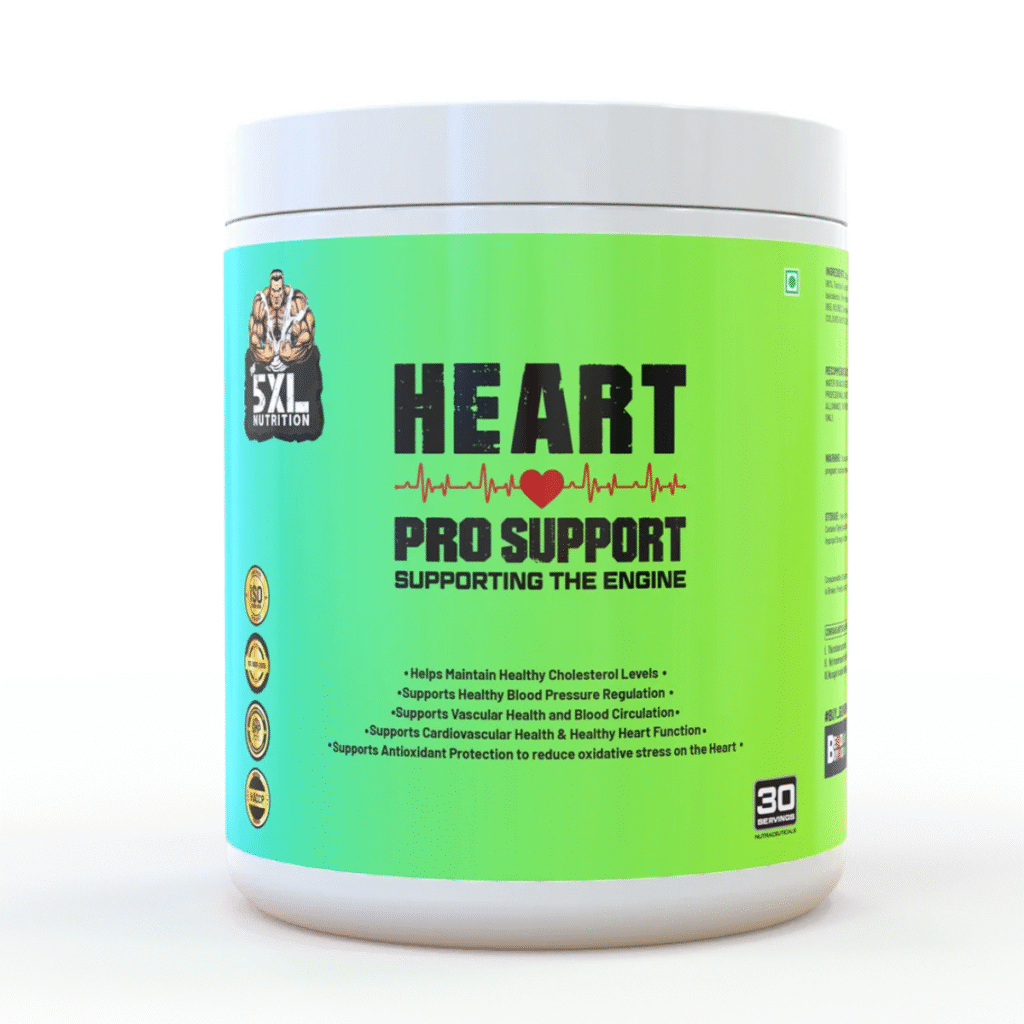
The 5XL Heart Pro Support: An Honest Positioning Statement
The 5XL explicitly positions Heart Pro Support as a proactive wellness addition. It aims to support blood pressure and cholesterol levels already within a normal range, and to support general circulation, alongside a healthy lifestyle. It does not claim to treat or prevent cardiovascular disease.
This is a more conservative and more accurate claim than much of what the heart health supplement category asserts. That positioning reflects the honest evidence landscape for herbal cardiovascular support formulas described above. A product that accurately represents its role as a lifestyle complement rather than a clinical treatment is a product you can trust to mean what it says.
FSSAI approved. GMP certified manufacturing. Batch-level authentication available at the5xlnutrition.com/verify-product.
Shop The 5XL Heart Pro Support at the5xlnutrition.com
FAQ
Q: Do heart health supplements actually work?
The honest answer: it depends what “work” means. For specific, measurable biochemical effects – Omega-3 reducing triglycerides, CoQ10 replenishing statin-depleted levels – the evidence is reasonably supportive. For preventing heart attacks or strokes in general populations at typical OTC supplement doses, the evidence is considerably weaker than most marketing implies. Supplements work best as one part of a broader lifestyle approach, not as a primary cardiovascular intervention.
Q: Is there strong evidence for fish oil preventing heart attacks?
No, not at typical OTC doses. Several large, well-designed trials – including VITAL, ASCEND, and ORIGIN – found no significant reduction in heart attacks or strokes among general-population participants taking standard fish oil supplements. Omega-3’s most consistently supported cardiovascular benefit is triglyceride reduction, which is a different claim from “prevents heart attacks.” High-dose prescription EPA products have shown event reduction in specific populations, but these are prescription medications, not standard supplements.
Q: What does CoQ10 actually do for the heart?
CoQ10 is a component of the mitochondrial energy production process, and cardiac muscle has an unusually high energy demand and CoQ10 dependence. Its most evidence-grounded cardiac uses are replenishing levels that statin medication depletes (a well-established pharmacological mechanism) and serving as an adjunct in diagnosed heart failure management (as shown in the Q-SYMBIO trial). Its evidence as a general “heart protector” for healthy adults without these specific conditions is considerably weaker.
Q: Are herbal heart supplements effective?
Most herbal cardiovascular supplements carry a traditional use history and plausible mechanisms, but their clinical evidence base is thin and inconsistent relative to pharmaceutical interventions. They fit most accurately as proactive wellness additions for generally healthy adults, not as treatments for diagnosed cardiovascular conditions.
Q: Can supplements lower blood pressure?
Some evidence supports modest blood-pressure-adjacent effects from CoQ10 and Omega-3 at relevant doses. However, “reduces blood pressure in some studied populations by a modest amount” is a very different claim from “treats hypertension.” Diagnosed hypertension requires medical management. For people with readings in the high-normal range, supplements are a potential complement to lifestyle management, not a first-line treatment.
Q: When should I take a heart health supplement versus seeing a doctor?
See a doctor first if you have any symptoms (chest pain, breathlessness, irregular heartbeat, swelling), known risk factors (family history of heart disease, diabetes, high blood pressure, high cholesterol), or if you’re over 40 and haven’t had a recent cardiovascular health check. Supplements suit people as a complement to good health, not as an alternative to appropriate medical evaluation of actual symptoms or risk factors.
The Bottom Line
Heart health supplements occupy a legitimate but limited space in cardiovascular wellness. When positioned correctly, some carry genuine evidence for specific effects. When positioned incorrectly, they can give people false confidence that a capsule does work only lifestyle change and medical care can do.
The evidence landscape in 2026 is clear. Omega-3 fish oil has strong evidence for triglyceride reduction and weaker evidence for heart-attack prevention at standard doses. CoQ10 has the most specific evidence for statin-associated depletion and diagnosed heart failure as an adjunct. Herbal cardiovascular formulas have traditional use histories and plausible mechanisms, with thinner clinical trial evidence.
All of them, at their most legitimate, are additions to a foundation, not the foundation itself. The foundation remains: regular exercise, a diet rich in whole foods and healthy fats, not smoking, adequate sleep, stress management, and appropriate medical care for any diagnosed conditions or risk factors.
Supplements work best when this is already true.