Zinc Deficiency in Vegetarian Indian Athletes: How to Fix It Without Eating Meat
Your Testosterone Problem Might Not Be a Training Problem
You’re training hard. Consistently. You’re hitting your protein numbers paneer, curd, dal, whey.
But the strength gains have slowed. Recovery takes longer than it used to. Your morning motivation to train feels lower than it should. And somewhere in the background, you’ve noticed your drive, physical, mental, competitive has quietly flatlined.
The instinctive diagnosis in Indian gym culture is overtraining, stress, or insufficient protein. A smaller number of athletes will suspect low testosterone. Almost none will think to ask about zinc.
They should.
Zinc is the most directly testosterone-relevant mineral in the human body – and vegetarian Indian athletes are, structurally and systematically, the most zinc-deficient athletic population in the world.
The combination of a staple diet built on high-phytate foods that bind and eliminate zinc before it can be absorbed, the complete absence of haem zinc from any meat source, elevated sweat losses in India’s climate, and the chronically elevated cortisol of high-volume training under life stress creates a zinc deficit that progressively suppresses testosterone, impairs T-cell immune function, blunts muscle protein synthesis, and slows recovery – often for months or years before anyone identifies the root cause.This article covers the full mechanism: what zinc does in the testosterone pathway, why vegetarian Indian athletes are most vulnerable, how to test your status, which dietary strategies move the needle, and how to use the 5XL Multivitamin and 5XL Test Up together to correct the deficit and restore the anabolic hormonal environment your training demands.
Zinc and Testosterone: The Hormonal Connection Every Indian Athlete Should Understand
Zinc is not tangentially related to testosterone. It is biochemically embedded in the testosterone synthesis and regulation pathway at multiple critical points.
Point 1 – The Rate-Limiting Enzymatic Step
Testosterone synthesis in Leydig cells of the testes follows a cascade from cholesterol through several intermediates, with the final conversion of androstenedione to testosterone catalysed by 17β-hydroxysteroid dehydrogenase (17β-HSD) – a zinc-dependent enzyme. When cellular zinc availability falls, 17β-HSD activity declines proportionally, directly reducing the rate of testosterone synthesis regardless of the availability of upstream precursors.
This is not a downstream effect – it is the terminal enzymatic step. Low zinc = low 17β-HSD activity = less testosterone produced per unit of LH stimulation.
Point 2 – Aromatase Inhibition
Zinc directly inhibits aromatase – the enzyme responsible for converting testosterone to oestradiol. In zinc-replete individuals, this inhibition maintains a healthy testosterone-to-oestrogen ratio. In zinc-deficient individuals, aromatase activity increases, diverting a larger proportion of the already-reduced testosterone pool toward oestradiol conversion.
The practical consequence: zinc deficiency creates a double hormonal penalty – less testosterone produced (Point 1) and more of what is produced converted to oestrogen (Point 2). The net testosterone-to-oestrogen ratio falls significantly below optimal.
Point 3 – LH Receptor Sensitivity
The pituitary gland releases luteinising hormone (LH) to signal Leydig cells to produce testosterone. This LH signal is received by LH receptors on Leydig cell surfaces – receptors that require adequate intracellular zinc to maintain their signalling sensitivity. Zinc deficiency reduces LH receptor responsiveness, meaning even normal LH output from the pituitary produces a blunted testosterone response at the testicular level.
The Clinical Evidence
A landmark study by Prasad et al. published in Nutrition (1996) placed the zinc-testosterone relationship on a definitive clinical footing. Young healthy men placed on a zinc-restricted diet for 20 weeks showed a 74% reduction in serum testosterone – from 39.9 nmol/L to 10.6 nmol/L. Subsequent zinc repletion restored testosterone fully to baseline.
In the reverse direction: zinc supplementation in a group of elderly zinc-deficient men doubled their serum testosterone over six months. The testosterone response to zinc supplementation is not a minor modulation – in deficient individuals, it is one of the most potent natural testosterone interventions available.
For a vegetarian Indian athlete who has been zinc-deficient for months or years, correcting zinc status is not just a micronutrient housekeeping task. It is a direct hormonal intervention.
Zinc and T-Cell Function: The Training Immunity Link
Testosterone is not the only high-priority downstream consequence of zinc deficiency. The immune implications are equally significant – and in Indian athletes training through variable environmental and dietary stress, they manifest as a very familiar pattern.
Thymulin and T-Cell Maturation
The thymus gland produces a hormone called thymulin that is directly responsible for the maturation and activation of T-lymphocytes – the adaptive immune cells that provide targeted responses to pathogens and regulate immune memory. Thymulin has a zinc atom at its active site. Without zinc, thymulin is synthesised in its inactive (apothymulin) form and cannot activate T-cells.
This is not an indirect effect. It is a structural dependency: no zinc = no active thymulin = impaired T-cell activation = compromised adaptive immunity.
Natural Killer Cell Cytotoxicity
Natural killer (NK) cells are innate immune cells that destroy virus-infected cells and tumour cells without prior sensitisation. NK cell cytotoxic activity – the mechanism through which they eliminate targets – is zinc-dependent. Zinc-deficient individuals show significantly reduced NK cell activity, increasing susceptibility to viral infections. For athletes in the post-training immunosuppression window, this reduced NK activity is the mechanism behind the “always catching something after a hard week” pattern.
Neutrophil Function
Neutrophils are the first-responder immune cells that engulf and destroy bacterial pathogens. Their primary mechanism – the oxidative burst (release of reactive oxygen species to kill pathogens) – requires zinc-dependent enzymes including superoxide dismutase (SOD). Zinc deficiency impairs neutrophil oxidative burst efficiency, slowing the first-line response to bacterial infection.
The Athlete’s Immune Reality
For vegetarian Indian athletes, the immune consequences of zinc deficiency are not theoretical – they manifest as:
- 3+ minor infections (colds, throat infections) per 12-week training block
- Prolonged illness recovery (7-10 days for a standard cold rather than 3-5 days)
- Recurring mouth ulcers – one of the most consistent clinical signs of zinc insufficiency, reflecting impaired mucosal epithelial turnover
- Slow healing of training abrasions and minor skin injuries
- Feeling “run down” during intensification phases without a clear single cause
Each infection missed from training is a week of lost adaptation. Each subclinical immune event that doesn’t fully manifest as illness still costs recovery quality. The cumulative training cost of chronically impaired zinc-dependent immunity over a 12-month cycle is significant – and almost entirely correctible.
Why Vegetarian Indian Athletes Are Structurally Zinc-Deficient
Understanding the mechanism matters because it determines the solution. This is not a problem of insufficient food variety or careless eating. It is a structural incompatibility between the traditional Indian vegetarian diet and the zinc requirements of high-volume athletic training.
The Phytate Problem: India’s Dietary Anti-Nutrient
Phytic acid is stored in the seeds and bran of grains and legumes as a phosphorus reserve. It is also a highly efficient chelator of divalent minerals – particularly zinc – forming insoluble mineral-phytate complexes in the gastrointestinal tract that are excreted rather than absorbed.
The foods with the highest phytate content are the foundation of the Indian vegetarian diet: whole wheat atta, brown rice, rajma, chana, moong, masoor, soybean. These foods are nutritionally excellent in many ways – but their phytate content severely limits zinc bioavailability regardless of how much zinc the food actually contains.
The standard metric is the phytate-to-zinc molar ratio:
| Phytate:Zinc Molar Ratio | Zinc Absorption Impact |
| Below 5 | Good zinc absorption (40-50%) |
| 5-15 | Moderate inhibition (20-30% absorption) |
| Above 15 | Severe inhibition (<15% absorption) |
Traditional Indian vegetarian meal combinations – atta roti + dal + rice – routinely produce phytate:zinc molar ratios of 18-25, firmly in the severe inhibition range. An athlete eating “plenty of dal and roti” and feeling confident about zinc intake is absorbing less than 15% of the zinc in those foods.
No Haem Zinc
The zinc in red meat, poultry, and shellfish is partially bound to animal tissue proteins in a form that partially resists phytate chelation. This “haem zinc” is absorbed at 2-3 times the rate of plant-source zinc. A vegetarian Indian athlete has zero haem zinc in their diet – relying entirely on the low-bioavailability plant zinc that phytate is actively working to prevent them from absorbing.
The practical implication: a vegetarian Indian athlete needs to consume approximately 2-3 times more dietary zinc to achieve the same absorbed zinc as a meat-eater with equivalent dietary intake. The effective zinc RDA for vegetarian athletes, accounting for phytate inhibition and training sweat losses, is closer to 16-18mg/day – a target that whole foods cannot reliably meet.
Sweat Losses in Indian Training Conditions
Zinc is present in sweat at concentrations of 0.4-1.2mg/L. An athlete training for 75-90 minutes in Indian summer conditions (30-40°C ambient temperature) loses 1.5-2.5L of sweat per session – representing 0.6-3mg of zinc per training session. Over a 5-session week in peak summer (April–June), sweat zinc losses can reach 10-15mg – approaching the entire absorbed zinc intake from a typical vegetarian Indian diet.
Cortisol-Driven Zinc Redistribution
Chronically elevated cortisol – from combined training stress and the academic, career, and urban environmental stress endemic in Indian athlete populations – drives zinc redistribution from plasma to liver and bone, reducing plasma zinc availability for immune and anabolic functions. The most stressed athletes are the most zinc-functionally depleted – independent of dietary intake.
Recognising Zinc Deficiency: The Symptoms Profile
Zinc deficiency is labelled “subtle” in clinical literature because its symptoms overlap with many other athlete complaints – not because the impact on performance is subtle.
Hormonal and anabolic signals:
- Reduced morning erections or low libido – soft markers of testosterone suppression
- Low mood, irritability, or reduced competitive drive disproportionate to life stress
- Strength plateau or regression that doesn’t respond to training or nutrition adjustments
- Prolonged DOMS beyond 72 hours routinely – impaired satellite cell activation and repair
Immune signals:
- 3+ minor infections per training cycle
- Extended illness recovery beyond 5-7 days for standard viral infections
- Recurring mouth ulcers – one of the most specific clinical soft signs of zinc insufficiency
- Slow healing of training abrasions and minor injuries
Dermatological and structural signals:
- White spots on fingernails (leukonychia) – non-specific but associated with deficiency
- Hair thinning or increased shedding
- Dry or rough skin worsening during heavy training phases
Sensory signal:
- Reduced taste or smell sensitivity – zinc is required for carbonic anhydrase VI (gustin), the enzyme governing taste bud function. Reduced taste sharpness, or food tasting “flatter” than usual, is a specific functional zinc deficiency indicator.
If 4+ of these apply to a vegetarian Indian athlete training at high volume, zinc deficiency is the most probable explanation and a corrective intervention is clearly warranted.
Testing Zinc Status in India
Zinc status assessment has important nuances that affect how test results should be interpreted.
Serum zinc: The most accessible test in India – available at SRL, Dr. Lal PathLabs, Metropolis, and most diagnostic labs for ₹300-₹800 without a prescription. Normal lab range: 70-120 mcg/dL. Limitation: serum zinc is an insensitive marker – the body maintains plasma zinc within a relatively narrow range through tissue redistribution, meaning plasma zinc can appear “normal” while tissue stores are functionally depleted.
Practical interpretation for athletes: If serum zinc is below 80 mcg/dL in a vegetarian athlete training at high volume – supplement. If serum zinc is 80-100 mcg/dL but the symptom profile above matches – functional insufficiency is still likely and a corrective trial carries no meaningful risk at recommended doses.
Morning fasted testing produces the most reliable serum zinc readings – zinc follows a mild diurnal variation with post-meal dips from food phytate. A post-meal test underestimates true status more than a fasted measurement.
Dietary Strategies to Maximise Zinc Absorption From Plant Foods
Before supplementation, there are meaningful food preparation and dietary pairing strategies that can increase zinc bioavailability from plant sources by 30-50% – not by adding zinc, but by reducing phytate inhibition.
Soaking and Sprouting
Soaking legumes and grains for 8-12 hours activates endogenous phytase – an enzyme that degrades phytic acid, reducing phytate content by 30-50% before cooking. Sprouting for 24-48 hours extends this further, with phytate reductions of 50-75% and meaningful improvements in zinc bioavailability.
Daily practice: Soak rajma, chana, moong, and masoor overnight before cooking. Keep sprouted moong ready for salads, chaat, and side dishes. This single habit is the highest-impact dietary change for zinc absorption available to the Indian vegetarian athlete.
Fermentation
Traditional South Indian fermented foods – idli, dosa, dhokla – undergo bacterial fermentation that both produces lactic acid and activates phytase, significantly reducing phytate content. Idli and dosa from properly fermented batter have meaningfully better zinc (and iron) bioavailability than their non-fermented grain equivalents. Including fermented foods at least once daily is both culturally natural and nutritionally strategic.
Organic Acid Pairing
Citric acid (lemon, amla) and malic acid (tamarind) partially chelate phytate, competing with zinc for phytate binding and freeing more zinc for absorption. Squeezing lemon on dal, using tamarind in sambar, and including amla in the daily diet all have documented mineral absorption benefits. Standard Indian cooking practice already incorporates these – using them consistently and generously is the optimisation.
Strategic High-Zinc Plant Foods
Some plant foods offer better zinc content with lower phytate ratios and deserve daily inclusion:
- Pumpkin seeds (kaddu ke beej): 2.2mg zinc per 30g, moderate phytate – the single most zinc-dense convenient plant food available in India. A daily 30g serving of roasted pumpkin seeds is one of the most impactful dietary changes a vegetarian athlete can make.
- Cashews: 1.6mg zinc per 30g, low-moderate phytate – good daily snack choice.
- Hemp seeds: Strong zinc-to-phytate ratio; increasingly available in urban Indian health stores.
- Tofu: Processing significantly reduces phytate versus whole soybeans; reasonable zinc bioavailability.
The Supplement Strategy: Multivitamin + Test Up
Dietary strategies improve zinc bioavailability meaningfully – but for vegetarian Indian athletes training at volume, they are insufficient as a standalone correction. Supplementation is the reliable bridge between dietary limitation and performance-adequate zinc status. The question is not whether to supplement, but which products address the full picture.
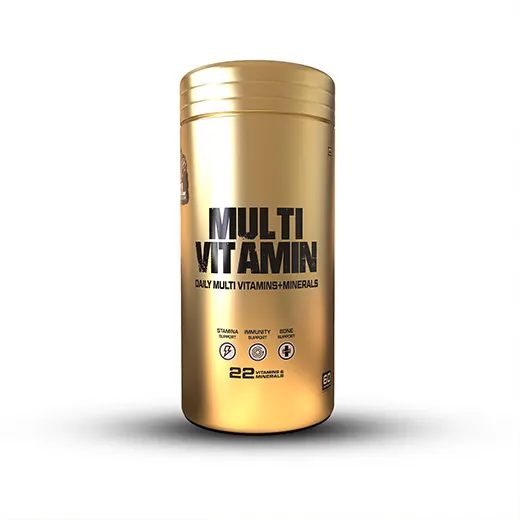
5XL Multivitamin – The Micronutrient Foundation
The 5XL Multivitamin addresses the interconnected deficiency cluster that characterises virtually every vegetarian Indian athlete: zinc, vitamin B12, vitamin D3, iron, and magnesium. These deficiencies are not independent – they compound each other through shared mechanisms.
Zinc deficiency impairs gut epithelial cell turnover, reducing absorption of B12 and iron. B12 deficiency impairs the rapid cell division required for gut lining renewal, worsening zinc absorption. Vitamin D deficiency amplifies cortisol reactivity, driving further zinc redistribution. Correcting zinc in isolation while B12, D3, and magnesium remain deficient produces a partial response – the cofactor gaps limit the full expression of zinc repletion.
The 5XL Multivitamin uses bioavailable chelate forms of zinc – not the zinc oxide found in most generic Indian multivitamins, which is absorbed at approximately 10% efficiency and largely excreted. The difference between a multivitamin providing 15mg zinc oxide and one providing 10mg zinc bisglycinate is not 5mg – it is the difference between approximately 1.5mg absorbed zinc and approximately 7mg absorbed zinc.
For zinc specifically: taken with a meal that contains some fat and organic acids (a typical Indian meal with dal and lemon), the multivitamin’s chelated zinc is absorbed at meaningful efficiency, contributing to the daily zinc requirement alongside dietary sources.
Shop The 5XL Multivitamin Use code GOF35 for 35% off
5XL Test Up – Targeted Testosterone Support Through Zinc and Botanical Synergy
While the multivitamin addresses the micronutrient foundation, 5XL Test Up is the targeted testosterone-support product designed for athletes specifically seeking to restore and optimise the androgen environment that zinc deficiency suppresses.
Test Up combines zinc with a clinically informed botanical stack – working through complementary mechanisms to address testosterone from both the micronutrient (zinc) and adaptogenic/hormonal sides simultaneously.
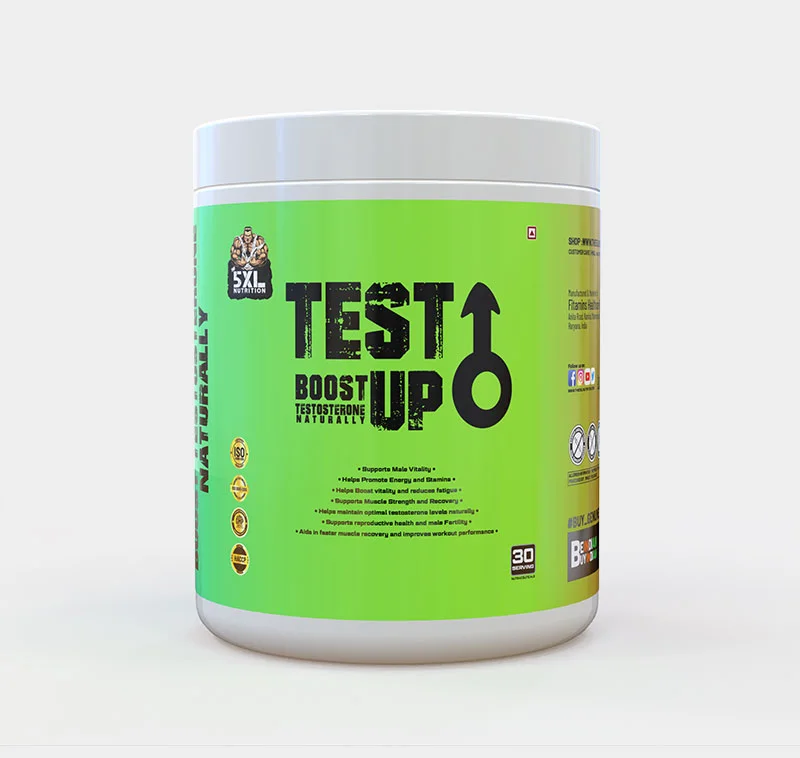
Key active mechanisms in Test Up:
Zinc (chelated):
At a therapeutic dose that directly supports 17β-HSD activity, aromatase inhibition, and LH receptor sensitivity – the three testosterone pathway points discussed at the opening of this article. For a zinc-deficient vegetarian athlete, this is the most direct possible testosterone support: replacing the mineral the body needs to synthesise its own testosterone, rather than adding any exogenous hormone or synthetic compound.
Ashwagandha (KSM-66):
The most clinically studied adaptogen for testosterone support. KSM-66 at 600mg/day has been shown in RCTs to produce a 17% increase in testosterone in stressed men – primarily through HPA axis modulation that reduces cortisol’s suppressive effect on LH signalling and testicular testosterone synthesis. This ashwagandha mechanism is synergistic with zinc’s direct enzymatic support – zinc enables the synthesis pathway; ashwagandha removes the cortisol brake that suppresses it.
Fenugreek extract (Trigonella foenum-graecum):
One of India’s most traditional herbal medicines now with a meaningful clinical evidence base for testosterone support. Fenugreek contains protodioscin – a steroidal saponin – and furostanolic saponins that inhibit 5-alpha reductase and aromatase. A double-blind placebo-controlled trial (Phytotherapy Research, 2011) found fenugreek extract supplementation produced significant improvements in free testosterone, sexual function, and energy levels in men aged 25-52 over 8 weeks. Notably, this is a culturally familiar Indian botanical – methi in a supplement is not an alien compound, it is an Ayurvedic tonic with modern clinical validation.
Tribulus terrestris:
Traditional adaptogen with evidence for supporting luteinising hormone secretion and free testosterone levels in deficient populations. Effects are most pronounced in individuals with suboptimal baseline testosterone – exactly the profile of a zinc-deficient vegetarian Indian athlete.
Vitamin B6:
Cofactor for zinc absorption and directly involved in the synthesis of androgen receptor proteins that mediate testosterone’s cellular effects. Adequate B6 ensures the testosterone being produced and protected by the zinc-ashwagandha-fenugreek combination is actually acted upon at the receptor level.
What Test Up is not:
Test Up is not a synthetic testosterone booster, prohormone, or SARM. It contains no banned substances. It works by providing the micronutrient substrate and botanical modulators that allow the body’s own testosterone production system to function optimally – restoring a suppressed system, not pharmacologically overriding it. This distinction matters both for safety and for setting realistic expectations.
Expected timeline:
For zinc-deficient vegetarian athletes, meaningful testosterone restoration is typically measurable at 6-8 weeks of consistent use. Subjective improvements in training drive, recovery energy, and mood often emerge at 3-4 weeks as zinc status normalises and cortisol-testosterone dynamics begin to improve.
Shop 5XL Test Up Use code GOF35 for 35% off
Recommended Protocol: Multivitamin | Test Up for Vegetarian Indian Athletes
| Supplement | Timing | Primary Purpose |
| 5XL Multivitamin | With largest meal (lunch or dinner) | Foundation: zinc + B12 + D3 + iron + magnesium |
| 5XL Test Up | As directed – typically 1 scoop daily with meals | Targeted: testosterone optimisation via zinc + botanicals |
Combined rationale: The multivitamin addresses the full interconnected micronutrient deficiency cluster. Test Up specifically targets the testosterone pathway with a higher zinc dose and botanical cofactors. Together they provide the micronutrient substrate correction and the hormonal environment support that zinc-deficient vegetarian athletes need.
Duration: Minimum 8-week commitment for meaningful hormonal restoration. Ongoing use is appropriate for athletes in sustained heavy training phases where zinc losses continue to exceed dietary intake.
Stack compatibility: Both products are compatible with creatine, protein isolate, ZMA (check combined zinc dosage – keep total supplemental zinc below 35-40mg/day), ashwagandha standalone, and standard pre-workout supplements. No adverse interactions exist between these products at recommended doses.
Zinc at a Glance: Vegetarian Indian Athlete Reference
| Variable | Detail |
| RDA (standard) | 11mg/day for adult men |
| Effective requirement for vegetarian Indian athletes | 16-18mg/day (accounting for phytate inhibition and sweat losses) |
| Dietary absorption from high-phytate Indian meals | 10-15% |
| Best plant food sources | Pumpkin seeds (2.2mg/30g), cashews (1.6mg/30g), tofu, sprouted moong |
| Best supplement forms | Monomethionine, bisglycinate, picolinate – in this order |
| Avoid | Zinc oxide (10% bioavailability) |
| Testosterone reduction from severe deficiency | Up to 74% (Prasad et al., 1996) |
| Time to restore from deficiency | 6-12 weeks consistent supplementation |
| Tolerable upper intake (all sources) | 40mg/day |
| Signs of toxicity (above UL long-term) | Copper deficiency, nausea |
FAQ
Q: Can zinc supplementation actually raise my testosterone?
Yes – if zinc deficiency is the cause of suboptimal testosterone, which it is in the majority of vegetarian Indian athletes training at high volume. The 74% testosterone reduction documented in Prasad et al. from deliberate zinc restriction, and the restoration to baseline following repletion, establishes this relationship definitively. The testosterone benefit is a restoration effect – correcting suppression, not exceeding your natural ceiling. For zinc-deficient athletes, this restoration is substantial and clinically meaningful.
Q: What’s the difference between Test Up and just taking a zinc supplement?
A standalone zinc supplement addresses one point in the testosterone pathway – the enzymatic synthesis step. Test Up addresses the full testosterone production and maintenance system: zinc for synthesis, ashwagandha for cortisol-mediated suppression, fenugreek for aromatase and 5-alpha reductase modulation, and tribulus for LH support. The botanical combination addresses the hormonal environment around testosterone, not just the mineral substrate for its production. For vegetarian athletes whose testosterone is suppressed through multiple mechanisms simultaneously, the comprehensive approach produces better outcomes.
Q: I’ve been eating methi for years as part of my diet. Does that mean fenugreek is already helping my testosterone?
Dietary fenugreek (methi) provides the phytochemicals, but typically at lower concentrations than the standardised extract used in clinical research. The protodioscin content of standardised fenugreek extract is higher and more consistent than whole methi as a vegetable or spice. Food-form fenugreek contributes – it is not a substitute for therapeutic-dose extract when the goal is measurable testosterone support.
Q: Is it safe to take Test Up alongside the 5XL Multivitamin?
Yes – check combined zinc content from both products and ensure total supplemental zinc stays below 35-40mg/day. At recommended doses of both products, this is within safe parameters for most healthy adults. The B6 in both products is additive – total daily B6 from both products combined should remain well below the tolerable upper intake level of 100mg.
Q: How long before I notice a difference from correcting zinc deficiency?
Energy levels and immune resilience typically begin improving within 23 weeks as zinc status normalises. Testosterone-mediated effects – improved training drive, mood, recovery motivation, and libido – typically manifest at 4-6 weeks. Measurable strength and body composition changes, driven by improved anabolic hormone status and protein synthesis signalling, are typically significant by 10-12 weeks.
Q: Are there any vegetarian foods particularly good for testosterone beyond zinc?
Yes. Several plant compounds support the testosterone environment beyond zinc: ashwagandha (KSM-66, in Test Up), fenugreek seeds (protodioscin content), pomegranate (antioxidant protection of testosterone-producing Leydig cells from oxidative stress), vitamin D from sun exposure and supplementation (direct testosterone correlation – covered in the Vitamin D3 article in this series), and adequate dietary fat (testosterone is synthesised from cholesterol – very low fat diets impair steroidogenesis). These compound the benefit of zinc correction rather than replacing it.
Q: Will Test Up show on a doping test?
5XL Test Up contains no banned substances under WADA or NADA guidelines. All active ingredients are natural botanical extracts and micronutrients. However, athletes competing in tested competitions should ensure any supplement they use is batch-tested under a certified programme (Informed Sport, NSF Certified for Sport) that screens for contamination, as no supplement can guarantee complete absence of trace contaminants from shared manufacturing environments without a recognised third-party certification. Contact 5XL directly for batch testing documentation.
The Bottom Line
Zinc deficiency in vegetarian Indian athletes is not a possibility to consider. For the majority of plant-based athletes training at serious volume in India’s climate – it is a near-certainty to correct.
The combination of the most phytate-dense staple diet in the world, the total absence of haem zinc from any animal source, elevated sweat losses during Indian summer training, and cortisol-driven redistribution creates a structural zinc deficit that accumulates over months and years – progressively suppressing testosterone, impairing T-cell immunity, blunting muscle protein synthesis, and extending recovery timelines.
The correction is not complicated. But it requires the right approach:
- Fix bioavailability first – soak and sprout legumes, eat fermented foods daily, use lemon generously on zinc-containing meals
- Add pumpkin seeds and cashews daily – the most accessible high-quality plant zinc sources in India
- Supplement with bioavailable chelate zinc – not zinc oxide
- Use the 5XL Multivitamin to close the interconnected micronutrient cluster (zinc + B12 + D3 + magnesium + iron) that co-deficiency patterns require
- Add 5XL Test Up to specifically target the testosterone pathway – combining corrective zinc with ashwagandha, fenugreek, and tribulus for a comprehensive anabolic hormonal restoration protocol
The athletes who correct this deficiency consistently report one of the clearest performance step-changes available through supplementation: better recovery, stronger training drive, higher sustained energy, and measurable strength progression that resumes where it had stalled. Not because Test Up is pharmaceutical. Because the body’s own testosterone system was being suppressed by a correctable mineral deficit – and now it isn’t.
Shop 5XL Multivitamin | Code GOF35 for 35% off
Shop 5XL Test Up | Code GOF35 for 35% off