How Gut Health Affects Protein Absorption: The Link Every Indian Athlete Is Missing
You’re Hitting Your Protein Targets. So Why Aren’t You Growing?
You know your numbers. 160g of protein daily. Whey isolate post-workout. Dal and paneer through the day. Chicken at dinner.
But the gains have stalled. Recovery feels sluggish. You’re bloated more mornings than not. And no matter how meticulously you track your intake, something isn’t adding up.
Here’s what most gym nutrition advice in India doesn’t tell you: protein intake and protein absorption are not the same thing.
A gram of protein consumed is not a gram of protein absorbed, utilised, and synthesised into muscle tissue. Between the moment food enters your mouth and the moment amino acids are available to muscle cells, there is a complex, multi-stage digestive process – and every step of that process depends on gut health.
Compromise the gut, and you compromise absorption efficiency. The result: an athlete eating enough protein on paper but chronically undersupplied at the tissue level – training hard, supplementing carefully, and still falling short of their potential because the gut is the silent variable no one is measuring.
This article breaks down exactly how gut health affects protein absorption, what disrupts it in Indian athletes specifically, how to identify whether your gut is the bottleneck, and the targeted interventions – including 5XL Gut Pro and Betaine HCl + Pepsin – that correct it.
What is the best probiotic supplement for athletes in India?
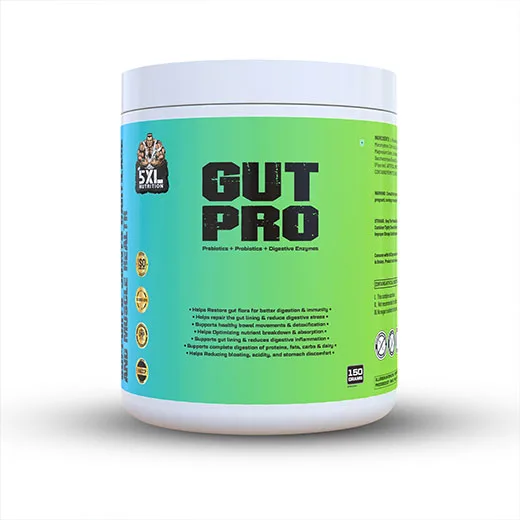
Athletes need a probiotic formula that specifically supports protein absorption, not just digestion. Research in the Journal of the International Society of Sports Nutrition found that probiotic supplementation significantly improved protein absorption markers in resistance-trained athletes. A dual prebiotic + probiotic formula like 5XL Gut Pro – which combines beneficial bacterial strains with digestive enzymes – provides this mechanism. For Indian athletes eating a high-carb, lower-fibre modern diet, daily probiotic support is especially important.
The Protein Absorption Pathway: Where Gut Health Intervenes
To understand how gut health disrupts protein absorption, you first need a clear picture of how protein is normally absorbed. Most people have a vague sense that “protein is digested in the stomach” – the reality is considerably more nuanced, and the failure points are multiple.
Stage 1 – Gastric Acid and Pepsin Activation (Stomach)
Protein digestion begins in the stomach. When food arrives, parietal cells in the gastric lining secrete hydrochloric acid (HCl), dropping stomach pH to between 1.5 and 3.5. This acidic environment serves two functions:
Protein denaturation: The acidic pH unfolds the tertiary and quaternary structures of dietary proteins, exposing peptide bonds to enzymatic access. Without adequate acidification, intact protein structures resist enzyme digestion.
Pepsinogen activation: Chief cells secrete pepsinogen – an inactive precursor – which requires acidic pH to convert to pepsin, the primary proteolytic enzyme of the stomach. Pepsin cleaves large proteins into smaller polypeptides. Without adequate gastric acid, pepsinogen remains unactivated and protein digestion in the stomach is severely impaired.
The failure point for many Indian athletes: Low gastric acid output – clinically called hypochlorhydria is significantly more prevalent than commonly assumed, particularly in individuals with chronic stress (which suppresses parietal cell function), frequent antacid use, or H. pylori infection (extremely common in India, with prevalence estimates of 50-70% of the adult population).
Stage 2 – Pancreatic Enzyme Secretion (Small Intestine)
The partially digested protein mass (chyme) entering the duodenum triggers the release of cholecystokinin (CCK), which signals the pancreas to release proteolytic enzymes – trypsin, chymotrypsin, elastase, and carboxypeptidases. These enzymes continue hydrolysing polypeptides into shorter peptides and free amino acids.
The failure point: Chronic inflammation of the intestinal lining, gut dysbiosis (microbial imbalance), and conditions like leaky gut reduce CCK signalling efficiency – meaning the pancreas receives a weaker trigger and secretes fewer digestive enzymes per meal. Less enzyme activity = less complete protein hydrolysis.
Stage 3 – Brush Border Enzyme Activity and Amino Acid Transport (Small Intestine)
The epithelial cells lining the small intestine carry brush border peptidases – membrane-bound enzymes that complete the hydrolysis of short peptides into individual amino acids and dipeptides for absorption. These cells also carry specific amino acid transport proteins that move amino acids across the intestinal wall into portal circulation.
The failure point – and this is where gut health becomes most critical: The brush border is not a passive surface. Its enzyme activity and transporter density depend directly on the health and integrity of the intestinal epithelium. A damaged, inflamed, or “leaky” intestinal lining has:
- Reduced brush border enzyme density
- Downregulated amino acid transporter expression
- Increased paracellular permeability (gaps between cells) – which allows partially digested protein fragments to enter circulation before being fully hydrolysed, triggering immune responses rather than delivering usable amino acids
This is the gut-protein absorption link that most Indian athletes are entirely unaware of.
Stage 4 – The Microbiome’s Role in Protein Utilisation
The gut microbiome – the 38 trillion bacteria inhabiting the gastrointestinal tract – is not a passive bystander in protein metabolism. It contributes to protein utilisation in several ways:
Fermentation of unabsorbed protein: Protein not absorbed in the small intestine enters the colon, where gut bacteria ferment it. Beneficial fermentation by Bifidobacterium and Lactobacillus species produces short-chain fatty acids (SCFAs) including butyrate – the primary fuel for colonocytes (colon lining cells), which in turn maintain intestinal barrier integrity.
Putrefactive fermentation: In a dysbiotic gut – where harmful bacteria outnumber beneficial species – unabsorbed protein is putrefied rather than beneficially fermented. Putrefaction produces ammonia, hydrogen sulphide, phenols, and indoles – compounds that are toxic in excess, damage the intestinal lining, and further impair absorption in a self-reinforcing cycle.
Serotonin production: Approximately 90-95% of the body’s serotonin is produced in the gut, largely by enterochromaffin cells responding to microbial signals. Serotonin regulates gut motility – the speed at which food moves through the intestine. Dysbiosis-impaired serotonin signalling disrupts motility, reducing the contact time food has with absorptive surfaces and further compromising absorption efficiency.
Why Indian Athletes Specifically Struggle with Gut-Mediated Protein Absorption
The physiological failure points above are universal. But several India-specific factors make gut-compromised protein absorption disproportionately common in the Indian athletic population.
H. pylori Prevalence – India’s Silent Gastric Problem
Helicobacter pylori is a bacterium that colonises the gastric lining and directly impairs parietal cell function – reducing HCl secretion and, downstream, pepsin activation. India has among the highest H. pylori prevalence rates globally: 50-70% of adults in most published estimates, with infection typically acquired in childhood through contaminated water and fecal-oral transmission.
An athlete with undiagnosed H. pylori infection is operating with chronically impaired Stage 1 protein digestion – potentially losing 15-30% of the protein digestive efficiency of the stomach before any other factor is considered. Symptoms are often absent or attributed to “normal” digestion: mild bloating, heaviness after protein-heavy meals, and occasional reflux.
High-Fibre, High-Phytate Staple Diet
India’s staple diet – wheat roti, rice, dal, sabji – is nutritionally excellent in many respects but creates specific challenges for protein digestion when the gut is not optimally functioning. High dietary fibre accelerates gastric emptying in some individuals, reducing the time available for gastric acid and pepsin to act on protein. High phytate content forms complexes with divalent minerals including zinc – and zinc is a cofactor in the synthesis of digestive enzymes and in gut lining cell turnover. Phytate-mediated zinc depletion therefore indirectly impairs the enzymatic machinery of protein digestion.
Urban Stress and Vagal Tone
The vagus nerve is the primary neural pathway connecting the brain to the gastrointestinal system. Parasympathetic (vagal) activity – the “rest and digest” state – drives HCl secretion, pepsinogen release, pancreatic enzyme secretion, and intestinal motility. Sympathetic (fight-or-flight) activation – the state of chronic urban stress – suppresses all of these.
Indian urban athletes are among the most chronically stressed populations in the world by survey data. Every post-workout meal consumed while mentally ruminating about work, traffic, or deadlines is a meal digested under sympathetic dominance – with suppressed gastric acid output and reduced enzyme secretion. This is not a fringe effect. It is a daily, meal-by-meal compounding of digestive inefficiency.
Frequent Antibiotic Use
India has among the highest rates of antibiotic consumption globally, with significant over-the-counter availability and frequent use for viral infections where antibiotics are ineffective. Antibiotics cause immediate, dramatic disruption of gut microbiome diversity – reducing beneficial bacteria populations that take 1-4 weeks (or longer without probiotic intervention) to recover. Athletes who have taken 2+ antibiotic courses in the past year are very likely operating with a significantly dysbiotic microbiome.
Whey Protein Volume Without Digestive Support
The popularity of whey protein supplementation has grown rapidly in Indian fitness culture – but the digestive capacity to handle 30-50g protein boluses multiple times daily has not scaled with it. The Indian gut, historically adapted to a diet where protein arrives in smaller, more distributed amounts throughout the day embedded in food matrices, is not inherently primed to extract maximum value from concentrated protein supplements without digestive support.
Signs Your Gut Is Limiting Your Protein Absorption
These symptoms indicate that gut function – not protein intake is the limiting variable in your nutrition:
Digestive symptoms after protein-rich meals:
- Bloating, gas, and abdominal distension within 1-2 hours of a high-protein meal or shake
- Heaviness or “fullness” that persists for 3-4 hours after eating
- Foul-smelling flatulence (hallmark of putrefactive fermentation of unabsorbed protein in the colon)
- Loose stools or unformed stool after protein-heavy meals
- Visible undigested food in stool
Performance and body composition signals:
- Protein intake appears sufficient on paper but muscle gain or retention is poor
- Prolonged DOMS beyond 72 hours despite adequate dietary protein
- Persistent fatigue that doesn’t resolve with rest or increased food intake
- Frequent minor infections suggesting impaired immune function (zinc and gut-mediated immunity)
Systemic signals:
- Skin breakouts correlated with high-protein eating phases
- Brain fog, low mood, or irritability – downstream effects of gut dysbiosis affecting serotonin production and systemic inflammation
- Iron or B12 deficiency despite dietary adequacy – a strong indicator of impaired intestinal absorption broadly
If three or more of these apply, gut function is almost certainly a meaningful limiting factor in your nutritional outcomes.
The Two-Product Fix: Gut Pro | Betaine HCl + Pepsin
Correcting gut-mediated protein absorption impairment requires addressing two separate but interconnected problems: digestive enzyme and acid insufficiency (Stage 1 and 2 failure) and microbiome dysbiosis (Stage 4 failure). A probiotic alone doesn’t fix low stomach acid. A digestive enzyme alone doesn’t rebuild a dysbiotic microbiome. Both are required.
5XL Gut Pro – Rebuilding the Microbiome Foundation
5XL Gut Pro is a clinically formulated multi-strain probiotic designed for the specific demands of athletic gut health – not a general wellness product repurposed for gym marketing.
Why multi-strain matters for athletes: Single-strain probiotics address individual bacterial population gaps. A compromised athletic gut typically has multiple species deficits – Lactobacillus populations involved in intestinal barrier integrity, Bifidobacterium species involved in SCFA production and colon lining health, and Akkermansia muciniphila populations involved in mucus layer maintenance. A well-formulated multi-strain product addresses the microbiome broadly rather than in isolated patches.
Key strains and their absorption-specific roles:
Lactobacillus acidophilus: Colonises the small intestinal lining and produces lactic acid – maintaining the slightly acidic environment optimal for brush border enzyme activity. Also produces bacteriocins that suppress pathogenic bacteria competing for nutrient resources and damaging the intestinal epithelium.
Bifidobacterium longum: Ferments dietary fibre into butyrate in the colon – the primary fuel for colonocyte energy production. Healthy colonocytes maintain tight junctions (the molecular seals between intestinal cells), preventing leaky gut and the systemic immune activation that impairs brush border enzyme expression in the small intestine.
Lactobacillus plantarum: Particularly relevant for Indian diets. L. plantarum is capable of partially degrading phytate – the anti-nutrient that impairs mineral absorption from Indian staple foods. By reducing phytate burden, it indirectly improves zinc bioavailability and, through zinc, supports the enzymatic machinery of protein digestion.
Lactobacillus rhamnosus GG: The most clinically studied probiotic strain globally. Strengthens intestinal barrier tight junction proteins (occludin, claudin, ZO-1), directly reducing intestinal permeability – the leaky gut mechanism that diverts partially digested protein fragments into the bloodstream as immune antigens rather than into portal circulation as usable amino acids.
Prebiotic inclusion: Gut Pro includes a prebiotic fibre component (FOS/inulin) to provide immediate fermentable substrate for the supplemented bacteria – ensuring colonisation and proliferation rather than passive transit. Without prebiotic support, probiotic bacteria often fail to establish in sufficient numbers to produce measurable effects.
Enteric coating: Probiotic viability through stomach acid is non-negotiable. Gut Pro uses enteric-coated capsules that dissolve in the small intestine rather than the stomach – delivering viable bacteria past the acidic gastric environment where most unprotected probiotics are inactivated.
Shop 5XL Gut Pro Use code GOF35 for 35% off
Betaine HCl + Pepsin – Fixing the Upstream Digestive Deficit
While Gut Pro addresses the microbiome and intestinal barrier, Betaine HCl + Pepsin addresses the upstream problem that affects many Indian athletes but is almost never discussed in gym nutrition content: insufficient gastric acid output.
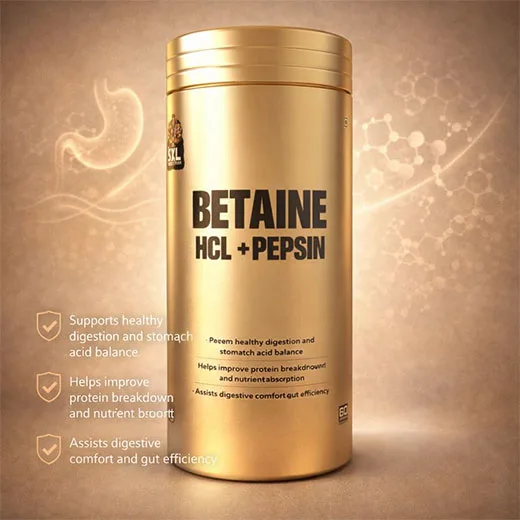
What Betaine HCl does: Betaine hydrochloride is a naturally occurring compound (found in beets, spinach, quinoa) that releases hydrochloric acid in the stomach when consumed with food. It directly supplements gastric acid output – temporarily correcting the deficit created by H. pylori infection, chronic stress, antacid use, or age-related parietal cell decline.
By restoring optimal gastric pH (1.5-3.5), Betaine HCl:
- Enables complete protein denaturation – unfolding complex protein structures for enzyme access
- Activates pepsinogen → pepsin conversion – restoring Stage 1 proteolytic activity
- Creates the correct acid signal for CCK release in the duodenum – improving pancreatic enzyme secretion at Stage 2
- Provides an antimicrobial barrier – the acidic stomach environment kills a significant proportion of ingested pathogens, including many bacteria that contribute to dysbiosis when they survive to colonise the small intestine
What Pepsin adds: Pepsin supplemented alongside Betaine HCl provides exogenous proteolytic activity at the gastric stage – directly beginning protein hydrolysis where gastric acid impairment has reduced endogenous pepsin activation. The combination of Betaine HCl (acid provision) + Pepsin (enzyme provision) addresses both failure mechanisms of hypochlorhydric protein digestion simultaneously.
Who benefits most from Betaine HCl + Pepsin:
- Athletes who experience heaviness, bloating, or prolonged fullness after protein-rich meals
- Those with known or suspected H. pylori history
- Athletes over 35 (gastric acid secretion declines with age)
- Frequent antacid users (even OTC antacids like omeprazole suppress parietal cell function significantly)
- Anyone who notices that protein shakes cause more GI distress than equivalent protein from whole food – a common hypochlorhydria indicator
Dosing: 1 capsule taken with the first bites of a protein-containing meal. Start with one capsule and assess for warmth or mild burning in the stomach (indicating acid sufficiency – reduce to half dose). Most hypochlorhydric individuals feel nothing uncomfortable at standard doses. Never take on an empty stomach.
Important note: Betaine HCl is not appropriate for individuals with active gastric ulcers, gastritis, or those taking NSAIDs regularly. If in doubt, test with a qualified practitioner first.
Shop 5XL Betaine HCl + Pepsin Use code GOF35 for 35% off
The Full Gut-to-Protein Absorption Stack at a Glance
| Absorption Stage | Problem | Product | Mechanism |
| Stomach – acid + pepsin | Hypochlorhydria, H. pylori, stress | Betaine HCl + Pepsin | Restores gastric pH; exogenous pepsin |
| Small intestine – pancreatic enzymes | Reduced CCK signalling from dysbiosis | Gut Pro (microbiome repair) | Restores CCK-responsive gut lining |
| Small intestine – brush border | Leaky gut, tight junction damage | Gut Pro (L. rhamnosus GG, B. longum) | Repairs tight junctions, reduces permeability |
| Colon – microbiome | Dysbiosis, putrefactive fermentation | Gut Pro (multi-strain + prebiotic) | Restores butyrate-producing species |
| Systemic – inflammation | Leaky gut → immune activation | Both products | Reduces antigen translocation and inflammation |
Implementation Protocol: Where to Start
Week 1-2: Start Gut Pro alone Begin with Gut Pro before introducing Betaine HCl. This establishes a baseline microbiome improvement and reduces any initial probiotic adjustment symptoms (transient bloating in the first week is common and normal as microbial populations shift).
Dose: 1-2 Scoop Gut Pro with breakfast, or as directed on the product label. Take with food for best colonisation outcomes.
Week 3 onwards: Add Betaine HCl + Pepsin Introduce Betaine HCl with your largest protein meal of the day (typically post-workout or dinner). Start with one capsule; increase to two if no warmth or discomfort is experienced and digestive symptoms persist.
Consistency window: Allow 4-6 weeks for Gut Pro’s microbiome effects to stabilise. Betaine HCl’s effects are meal-by-meal and immediate – you should notice improved comfort and reduced bloating after protein meals within the first week.
Concurrent dietary habits that amplify results:
- Chew food thoroughly – mastication is the first digestive step and the one most commonly skipped by athletes eating quickly between sessions
- Eat in a relaxed state – parasympathetic activation is the trigger for gastric acid secretion; eating while rushing or stressed directly suppresses the system these products are supporting
- Avoid ice-cold water with meals – reduces gastric temperature and temporarily impairs enzyme activity
- Include fermented foods daily (dahi, idli, kanji) – dietary probiotic reinforcement
- Reduce antacid use to medically necessary instances only – self medicating bloating with antacids when the underlying problem is low (not high) gastric acid is one of the most common and most counterproductive patterns in Indian gym culture
The Antacid Paradox: Why Most Indians Are Treating the Wrong Problem
This is worth addressing directly because it affects a significant proportion of Indian athletes.
The most commonly reported gastrointestinal symptom in Indian gym-goers is post-meal bloating, heaviness, and “acidity.” The instinctive response – and the one culturally reinforced by pharmacy availability and advertising is to take an antacid (omeprazole, ranitidine, Digene, Eno).
The paradox: many of these symptoms are caused by low stomach acid, not high stomach acid.
When gastric acid is insufficient, protein is not fully denatured or digested in the stomach. This undigested mass ferments in the lower stomach and early small intestine – producing gas, bloating, and pressure that rises upward, mimicking the sensation of “acidity” or reflux. The actual problem is the opposite of acidity: it is insufficient acidification.
Taking an antacid in this context further suppresses parietal cell function – worsening the underlying hypochlorhydria, reducing absorption further, and creating a dependency cycle where the athlete believes they have “too much acid” and continues suppressing the acid they need.
The Betaine HCl + Pepsin approach is the physiologically correct intervention for hypochlorhydric bloating. If symptoms improve with Betaine HCl supplementation (rather than worsening), that is a strong functional indicator that low acid output – not high – was the underlying issue.
FAQ
Q: Does gut health really affect how much muscle I build?
Yes, directly and measurably. Muscle protein synthesis is driven by the availability of free amino acids – particularly leucine in portal circulation after meals. If gut-mediated absorption delivers 20-30% fewer amino acids than the same dietary protein intake would in a healthy gut, the anabolic stimulus per meal is proportionally reduced. Over months of training, this gap compounds into meaningfully less muscle development than dietary intake would predict.
Q: Does gut health affect how much protein you absorb?
Yes – significantly. A healthy gut microbiome produces the proteolytic enzymes and maintains the intestinal lining integrity needed to extract maximum value from dietary protein. Compromised gut permeability (leaky gut) allows protein fragments to pass unabsorbed. Research in JISSN confirms that probiotic supplementation in resistance-trained athletes improves protein absorption markers. Taking protein without supporting your gut health means leaving a measurable percentage of every scoop unabsorbed.
Q: How do I know if I have low stomach acid rather than high?
The standard medical test is the Heidelberg pH test, which is not widely available in India. A practical functional indicator: if your “acidity” symptoms improve when you take apple cider vinegar (diluted in water) before meals – rather than worsening – low stomach acid is likely, as the vinegar supplements acid. Similarly, if Betaine HCl taken with protein meals reduces rather than increases discomfort, hypochlorhydria is the probable mechanism. A gastroenterologist can assess H. pylori status through a breath test or stool antigen test, which is widely available at Indian diagnostic labs.
Q: Will taking probiotics help if I also have low stomach acid?
Yes – but incompletely without addressing the acid problem. Gut Pro addresses the microbiome and intestinal barrier; Betaine HCl + Pepsin addresses gastric-stage digestion. They solve different parts of the absorption equation. Athletes with both dysbiosis and hypochlorhydria – a common combination need both.
Q: I eat a lot of curd and fermented food. Do I still need Gut Pro?
Fermented foods provide meaningful dietary probiotic support, but typically at lower and more variable CFU counts than therapeutic probiotic supplementation. More importantly, fermented foods primarily reinforce existing bacterial populations rather than introducing clinically validated strains at therapeutic doses. For athletes with established dysbiosis, damaged gut lining, or high training stress, therapeutic supplementation with specific strains at guaranteed CFU counts produces more reliable outcomes than food-based approaches alone.
Q: How long before I notice a difference in protein absorption and gym performance?
Betaine HCl produces immediate improvements in post-meal comfort. Gut Pro’s effects on the microbiome and intestinal barrier take 4-8 weeks to build meaningfully. Body composition changes attributable to improved absorption are typically noticeable at 8-12 weeks consistent with the timeframe of normal muscle protein accretion measurement.
Q: Is this relevant for vegetarian athletes eating dal and paneer rather than whey?
Yes – and arguably more so. Whole-food proteins (dal, paneer, soy) require more complete digestive processing than pre-hydrolysed whey peptides. A gut that struggles with protein digestion is more impaired at extracting amino acids from whole-food plant proteins – which also carry phytate and fibre that further challenge an already-compromised system. Vegetarian Indian athletes have compounding absorption challenges and benefit most from this approach.
The Bottom Line
Protein intake is only one half of the muscle-building nutrition equation. Protein absorption – the half no one talks about – is where most Indian athletes are unknowingly losing ground.
The gut is the interface between what you eat and what your body actually uses. When gastric acid is insufficient, the microbiome is dysbiotic, and the intestinal barrier is compromised, even a precisely calibrated, high-protein diet delivers meaningfully less than it should.
5XL Gut Pro repairs the microbial environment and intestinal barrier – the foundation of efficient nutrient extraction. Betaine HCl + Pepsin restores gastric-stage protein digestion – the upstream bottleneck that compromises every subsequent step.
Together, they address the complete gut-to-absorption pathway that determines whether the protein you eat becomes the muscle you train for.
Fix the gut. Get more from what you’re already eating.
Shop 5XL Gut Pro | Code GOF35 for 35% off
Shop 5XL Betaine HCl + Pepsin | Code GOF35 for 35% off