Ashwagandha for Sleep and Recovery: KSM-66 Evidence, Cortisol Benefits, and the Right Dose for Indian Athletes
You’re Training Hard. But Are You Actually Recovering?
Sleep is when your body earns the gains you worked for in the gym.
Growth hormone peaks during slow-wave sleep. Muscle protein synthesis accelerates overnight. Testosterone is restored. Cortisol the catabolic stress hormone, should fall during rest and stay low through the morning.
But for most Indian athletes training through academic pressure, demanding jobs, urban noise, and the biological stress of high volume training, that recovery window is chronically compromised.
You sleep 6-7 hours but wake up tired. Soreness lingers longer than it should. Your motivation to train fluctuates week to week. Your strength numbers stall despite doing everything right in the gym.
The root is often not insufficient training volume or inadequate protein. It’s elevated chronic cortisol and the resulting cascade of poor sleep quality, suppressed anabolic hormones, heightened inflammation, and impaired neural recovery that follows.
Ashwagandha (Withania somnifera) – and specifically the clinically standardised KSM-66 extract is the most evidence-supported adaptogen for exactly this problem. This guide covers what the research actually shows, why KSM-66 is not the same as generic ashwagandha powder, the correct dose and timing for Indian athletes, and how stacking it with ZMA creates a recovery protocol that is genuinely greater than the sum of its parts.
The Science Behind Ashwagandha: What It Actually Does
What Is an Adaptogen – and Why Does It Matter?
The term “adaptogen” is used loosely in the supplement industry, but it has a precise pharmacological definition: a compound that increases the body’s non-specific resistance to stress. biological, chemical, or physical without causing dependence or disrupting normal physiological function.
Ashwagandha qualifies on all three criteria. Its active compounds, primarily withanolides (steroidal lactones unique to the Withania somnifera plant), alkaloids, and saponins modulate the hypothalamic-pituitary-adrenal (HPA) axis, the central stress response system, reducing cortisol output and resetting the dysregulated stress hormones characteristic of chronically overtrained or high-stress individuals.
This isn’t a sedative effect. Ashwagandha doesn’t force sleep or blunt alertness. It normalises a dysregulated system. which is precisely why it improves sleep quality in stressed individuals without causing drowsiness in those whose cortisol is already well managed.
The HPA Axis: Understanding the Cortisol Problem
When the brain perceives stress whether from a heavy squat session, a work deadline, poor sleep, or urban commute noise. the hypothalamus triggers a cascade that ends in the adrenal glands releasing cortisol. In acute doses, cortisol is adaptive. It mobilises energy, sharpens focus, and manages inflammation.
The problem for athletes training 5-6 days per week under life stress is HPA axis dysregulation: the feedback loop that shuts cortisol off malfunctions, resulting in chronically elevated baseline cortisol. The physiological consequences are directly antagonistic to athletic goals:
- Elevated cortisol suppresses testosterone through competitive inhibition at the receptor level and direct inhibition of LH (luteinising hormone) signalling to the testes
- Cortisol activates muscle protein breakdown (catabolism) – directly opposing the anabolic stimulus of training
- Cortisol disrupts sleep architecture – specifically suppressing slow-wave (deep) sleep and reducing growth hormone secretion
- Cortisol drives central nervous system fatigue – reducing motivation, mood, and neural drive to train
- Cortisol elevates inflammatory cytokines – increasing IL-6 and TNF-α, extending recovery timelines
Ashwagandha acts directly on this axis, reducing cortisol output at both the hypothalamic level (reducing CRH release) and the adrenal level (modulating cortisol synthesis enzymes).
KSM-66: Why Extract Quality Is Everything
Here’s the question most Indian athletes don’t think to ask when buying ashwagandha: what percentage of withanolides is in this product?
Generic ashwagandha powder the brownish powder sold loose in Ayurvedic stores, or pressed into cheap capsules without standardisation contains highly variable withanolide concentrations. Typical raw ashwagandha root powder contains 1-3% withanolides. The clinical benefits documented in research require reliably concentrated, standardised extracts.
KSM-66 is a full-spectrum ashwagandha root extract developed by Ixoreal Biomed, standardised to a minimum of 5% withanolides and more importantly, it is the extract used in the majority of the gold-standard clinical trials cited by sports scientists and physicians. It uses a proprietary extraction method based on Green Chemistry principles, preserving the full spectrum of the root’s bioactive compounds without using alcohol solvents.
Sensoril is another standardised extract (from roots and leaves, standardised to withaferin A), with a different phytochemical profile and lower-dose efficacy but a stronger evidence base for anxiety reduction specifically.
For athletes prioritising strength, testosterone, cortisol reduction, and recovery KSM-66 is the evidence-based choice. For individuals primarily seeking anxiety management, Sensoril may also be appropriate, but KSM-66’s sports performance research is substantially more developed.
What the KSM-66 Clinical Trials Actually Show
Study 1 – Cortisol Reduction:
A randomised, double-blind, placebo-controlled trial published in the Indian Journal of Psychological Medicine (Chandrasekhar et al., 2012) administered KSM-66 at 300mg twice daily (600mg/day total) to stressed adults for 60 days. Results: 27.9% reduction in serum cortisol compared to placebo, alongside significant reductions in perceived stress scores (PSS), anxiety, and food cravings.
Study 2 – Strength and Recovery:
A study published in the Journal of the International Society of Sports Nutrition (Wankhede et al., 2015) randomised resistance-trained men to 300mg KSM-66 twice daily for 8 weeks. Results: significantly greater improvements in bench press (↑26.4kg vs ↑9.1kg in placebo) and leg extension strength, significantly greater muscle recovery, and significantly lower serum creatine kinase (a marker of muscle damage) post-exercise in the KSM-66 group.
Study 3 – Testosterone:
A randomised controlled trial in Evidence-Based Complementary and Alternative Medicine found KSM-66 at 600mg/day for 8 weeks produced a 17% increase in testosterone in stressed men compared to a 4% increase in placebo. Importantly, this was in individuals with elevated baseline cortisol. the testosterone benefit is largely mediated through cortisol suppression, not direct androgenic action.
Study 4 – Sleep Quality:
A study in PLOS ONE (Langade et al., 2019) randomised healthy adults to KSM-66 at 300mg twice daily vs placebo for 10 weeks. Results: significant improvements in sleep onset latency (time to fall asleep), total sleep time, sleep efficiency, and morning alertness, as measured by validated sleep quality tools (Pittsburgh Sleep Quality Index). The effect was clinically meaningful even in participants without clinical sleep disorders – directly relevant to athletes with subclinical sleep disruption.
Study 5 – VO₂max and Endurance:
A study in the Journal of Ayurveda and Integrative Medicine found KSM-66 supplementation significantly improved VO₂max and time-to-exhaustion in elite cyclists – suggesting benefits extend to aerobic performance, not just resistance training adaptations.
Why Indian Athletes Specifically Benefit from Ashwagandha
Ashwagandha is indigenous to the Indian subcontinent. it has been used in Ayurvedic medicine for over 3,000 years under the name Ashwagandha (Sanskrit: “smell of horse,” referring to both its root odour and the strength it was traditionally believed to confer).
But the case for Indian athletes isn’t merely cultural. Several India-specific physiological and lifestyle factors make the cortisol management benefits of ashwagandha particularly relevant:
High academic and career stress – The Indian educational and professional competitive environment is globally among the most demanding. Psychological stress is one of the most potent activators of the HPA axis, and chronically elevated mental stress compounds the cortisol burden of physical training in ways that Western sports nutrition research often underestimates.
Vitamin D deficiency compounding cortisol burden – As covered in previous content, the majority of Indian athletes are vitamin D3 deficient. Vitamin D directly modulates HPA axis sensitivity. Deficient individuals show amplified cortisol responses to the same stressors compared to sufficient peers, meaning Indian athletes are more cortisol-reactive per unit of training stress.
Poor sleep environment in urban India – Urban noise pollution (traffic, generators, construction), variable electricity reliability, and small living spaces with multiple occupants consistently disrupt sleep architecture in ways that compound training recovery deficits.
Cultural familiarity without quality standards – The widespread cultural familiarity with ashwagandha as an Ayurvedic tonic has created a large market of low-quality, non-standardised products in India. The gap between “ashwagandha” in a local churna and KSM-66 at a clinical dose is enormous – and most Indian athletes are not getting the evidence supported version.
Ashwagandha and Sleep: The Mechanism Most Articles Miss
Most content on ashwagandha and sleep frames the benefit as “stress reduction → relaxation → better sleep.” That’s accurate but incomplete.
KSM-66 ashwagandha improves sleep through at least three distinct mechanisms:
1. Cortisol Suppression in the Evening
Cortisol follows a natural diurnal rhythm – it should peak shortly after waking (cortisol awakening response) and fall progressively through the day, reaching its lowest point in the first half of the night during deep sleep. In chronically stressed athletes, evening cortisol remains elevated, directly competing with melatonin signalling and suppressing the GABAergic activity needed for sleep onset.
KSM-66’s HPA axis modulation lowers evening cortisol, removing one of the primary neurochemical barriers to sleep initiation.
2. Triethylene Glycol (TEG) Pathway
Research from the University of Tsukuba (Kaushik et al., 2017) identified triethylene glycol a non-withanolide compound in ashwagandha root. as an active sleep-promoting constituent operating independently of cortisol. TEG appears to act on NREM (non-rapid eye movement) sleep pathways, increasing slow-wave sleep depth. This is the sleep stage where growth hormone secretion and physical tissue repair are concentrated – the stage most disrupted by training overload and stress.
3. GABAergic Modulation
Withanolides have demonstrated GABA-A receptor modulating activity in preclinical research – similar in mechanism to the way many sleep medications work, but at a significantly milder, physiological level that does not produce dependency, tolerance, or residual sedation.
Together, these mechanisms explain why KSM-66 improves both sleep onset (time to fall asleep) and sleep quality (depth and architecture) – not just subjective restfulness.
ZMA: The Mineral Stack That Completes the Recovery Protocol
Ashwagandha addresses the hormonal and neural dimension of recovery cortisol, sleep architecture, anabolic hormone balance. ZMA addresses the micronutrient dimension that underpins the same systems.
ZMA stands for Zinc Monomethionine/Aspartate + Magnesium Aspartate + Vitamin B6. It is a specific formulation, not just zinc and magnesium thrown together. where the chelate form of each mineral determines bioavailability significantly.
Why Athletes Need ZMA
Zinc: Lost in meaningful quantities through sweat during intense training. Zinc is a direct cofactor in testosterone synthesis (5-alpha reductase activity), immune function, and antioxidant enzyme production. Indian athletes on predominantly plant-based diets face additional zinc challenges due to phytate-mediated inhibition of zinc absorption from legumes and whole grains. Deficiency is associated with suppressed testosterone, impaired immune function, and slower wound/tissue healing.
Magnesium: The most sweat-depleted mineral in athletes. Magnesium is involved in over 300 enzymatic reactions including ATP synthesis, muscle relaxation, and – critically for recovery – the regulation of NMDA receptors in the brain, which are central to deep sleep initiation. Low magnesium is one of the most common and most treatable causes of restless sleep, muscle cramping, and elevated nighttime cortisol in athletes.
A landmark study by Brilla and Conte (2000) in Journal of Exercise Physiology found that ZMA supplementation in NCAA football players for 8 weeks produced 30% higher free testosterone and significantly greater strength gains compared to placebo – effects attributed to correcting training-induced zinc and magnesium depletion rather than any pharmacological action.
Vitamin B6 (Pyridoxine): Enhances zinc and magnesium absorption and plays a direct role in serotonin and GABA synthesis both neurotransmitters critical to sleep quality. B6 is the connector between ZMA’s mineral provision and its sleep-quality benefits.
Why Ashwagandha + ZMA Is a Synergistic Pairing
These two supplements address recovery from complementary angles with overlapping targets:
| Recovery Factor | Ashwagandha (KSM-66) | ZMA |
| Cortisol reduction | Direct HPA axis modulation | Magnesium reduces cortisol reactivity |
| Testosterone support | Via cortisol suppression | Via zinc restoration |
| Sleep onset | Evening cortisol reduction, TEG pathway | Magnesium-mediated GABA/NMDA activity |
| Deep sleep quality | NREM sleep promotion (TEG) | Magnesium restores slow-wave sleep |
| Muscle repair overnight | GH secretion via better sleep architecture | ATP production and muscle relaxation |
| Immune resilience | Cortisol normalisation | Zinc restoration |
Taking both together before bed creates a recovery window that is meaningfully more restorative than either supplement. can provide alone and this is not theoretical stacking logic. The mechanisms are distinct, convergent, and well-documented individually.
The Right Dose: Ashwagandha 600mg and ZMA Timing for Athletes
Ashwagandha Dosing
The clinical dose is 600mg/day of KSM-66, typically divided as 300mg twice daily (morning and evening) or taken as a single 600mg dose before sleep.
For athletes prioritising sleep quality and cortisol management, the single pre-sleep dose of 600mg is the most practical and effective approach – concentrating the TEG sleep-pathway activity and evening cortisol-suppressing effect precisely when they are most needed.
For athletes also seeking daytime performance benefits (reduced perceived exertion during training, improved mood and motivation), the split 300mg morning + 300mg evening dose may offer broader coverage.
Minimum effective dose: 300mg/day of KSM-66 (some studies show benefit at this dose, though 600mg produces more consistent results across outcomes)
Duration: Clinical trials showing significant cortisol and strength benefits run 8-12 weeks. Ashwagandha is not a compound with acute effects like caffeine – expect meaningful changes at 3-4 weeks with full benefits evident at 8-10 weeks.
Cycling: Evidence does not require cycling ashwagandha for efficiency maintenance, but a common and practical approach is 8-12 weeks on, 2-4 weeks off – particularly during deload or lower-stress periods where HPA axis support is less critical.
ZMA Dosing and Timing
ZMA is specifically designed for pre-sleep administration – typically 30-45 minutes before bed, on an empty stomach or with minimal food.
Standard clinical dose: Zinc 30mg + Magnesium 450mg + Vitamin B6 10.5mg (as per the formulation used in the Brilla & Conte study).
Critical note: Do not take ZMA with calcium-containing foods or supplements (dairy, calcium tablets) – calcium directly competes with zinc and magnesium for intestinal absorption, significantly reducing ZMA efficacy. This is the most common error in ZMA usage among Indian athletes who consume dahi or milk close to bedtime.
Practical Pre-Sleep Stack Protocol
30-45 minutes before sleep:
- 1 serving 5XL Sleep healthy (on empty stomach – no dairy for 60 minutes prior)
- 1 capsule 5XL Ashwagandha 600mg KSM-66
- Optional: 1 glass haldi doodh (2 hours before bed, separate from ZMA to avoid calcium interaction window)
This combination taken consistently for 8-10 weeks – creates the optimal hormonal and neurological environment for deep, restorative sleep and maximal overnight recovery.
Who Benefits Most from This Stack?
High-volume strength and bodybuilding athletes (5-6 sessions/week): Training induced HPA stress is highest in this group. Cortisol-testosterone ratio is a primary determinant of hypertrophy outcomes. This stack directly improves that ratio.
Athletes in preparation or competition phases: Pre-competition stress – psychological and physical – produces the cortisol spikes most likely to impair sleep, suppress immune function, and blunt peak performance. KSM-66 specifically blunts the stress cortisol response without sedating or blunting competitive arousal.
Night-shift workers and students with irregular schedules: Sleep disruption from schedule irregularity produces HPA dysregulation and depletes zinc and magnesium faster than regular-schedule athletes. This stack is particularly high-value here.
Vegetarian and vegan athletes: Higher phytate intake, absent dietary zinc from meat sources, and absence of D3 from animal foods create a micronutrient vulnerability that ZMA directly addresses. Combined with ashwagandha’s cortisol benefits, this is arguably the most important recovery stack for plant-based Indian athletes.
Athletes over 30: Natural decline in testosterone production and reduced HPA axis resilience with age amplifies the benefits of both cortisol management (ashwagandha) and zinc-mediated testosterone support (ZMA).
What Ashwagandha Is Not
To set accurate expectations – and because overclaiming is endemic in the adaptogen supplement category – here is what KSM-66 ashwagandha does not do:
It is not a sleeping pill, does not sedate. It will not make you drowsy during the day. The sleep improvements are mediated through cortisol normalisation and NREM sleep architecture, not through direct CNS depression.
It is not a testosterone booster in the primary sense. The testosterone increases documented in research are largely secondary to cortisol reduction – removing the suppressive effect of elevated cortisol on the HPG (hypothalamic-pituitary-gonadal) axis. Athletes with already well-managed cortisol and normal testosterone will see smaller hormonal effects.
It is not a substitute for sleep hygiene. Training at midnight, using screens until 2 AM, consuming caffeine after 4 PM, and then expecting ashwagandha to salvage your sleep is not a viable strategy. The supplement amplifies good sleep practices; it cannot replace them.
It is not fast-acting. Unlike pre-workouts or stimulants, KSM-66 builds its effects over weeks. The 27% cortisol reduction documented in research occurred over 60 days – not 3 days.
Safety, Contraindications, and Quality Flags
Who Should Exercise Caution
- Individuals with autoimmune conditions (rheumatoid arthritis, lupus, Hashimoto’s) – ashwagandha’s immune-modulating effects may theoretically amplify autoimmune activity
- Those on thyroid medication – ashwagandha can mildly increase T3/T4 levels; individuals on levothyroxine or other thyroid medications should inform their physician before use
- Pregnant women – ashwagandha is traditionally contraindicated in pregnancy (uterotonic effects documented in animal models)
- Individuals on sedative medications or benzodiazepines – additive CNS-depressant effects are possible
Quality Red Flags to Avoid
- “Ashwagandha root powder” with no standardisation claim – no guarantee of withanolide content
- No withanolide percentage on label – standardised extracts always disclose this (minimum 5% for KSM-66)
- Very low price per capsule – KSM-66 is a premium licensed extract; products priced at ₹150-₹200 for 60 capsules are almost certainly not genuine KSM-66
- No third-party testing certificate – particularly important in the Indian supplement market where label accuracy is not consistently enforced
- “Proprietary blend” concealing dose – the 600mg dose matters; underdosed products produce attenuated or absent effects
The 5XL Ashwagandha 600mg and Sleep healthy: Built for the Indian Athlete
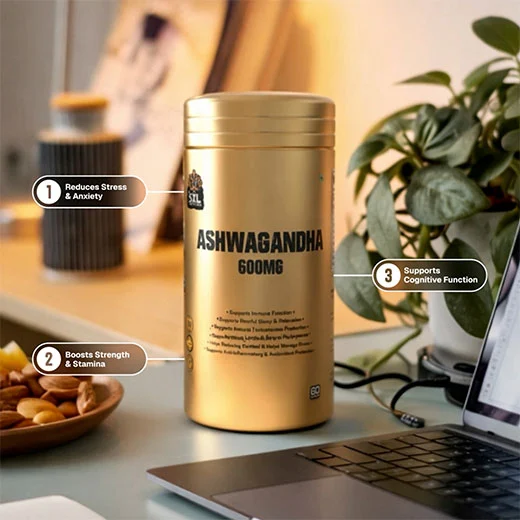
The 5XL Ashwagandha 600mg uses authentic KSM-66 extract at the full clinical dose – 600mg per capsule – standardised to ≥5% withanolides and verified by third-party testing. One capsule before bed delivers the exact dose used in the cortisol-reduction, strength, and sleep quality trials cited throughout this article.
There are no fillers, proprietary blends hiding the actual ashwagandha dose, or synthetic additives. You know exactly what you are taking and in what amount – which is the minimum standard for a supplement category where dose precision determines whether you experience results or not.
The 5XL ZMA completes the recovery stack with the Brilla & Conte-validated formulation – zinc monomethionine, magnesium aspartate, and B6 in the clinical doses that produced 30% free testosterone increases and significant strength improvements in elite athletes. Taken together on an empty stomach before sleep, this combination creates a hormonal and neurological recovery environment that allows training adaptations to fully express overnight.
Shop The 5XL Ashwagandha 600mg at the5xlnutrition.com Use code GOF35 for 35% off
Shop 5XL ZMA at the5xlnutrition.com Use code GOF35 for 35% off
FAQ
Q: How long does it take for KSM-66 ashwagandha to work?
Subjective improvements in stress tolerance and sleep quality are often noticeable within 2-3 weeks. Measurable cortisol reductions and strength benefits in clinical trials were documented at 8-12 weeks of consistent use. Do not assess efficacy before 6 weeks minimum.
Q: Can I take ashwagandha every day or should I cycle it?
Daily use for 8-12 week blocks is the protocol used in clinical research. After 10-12 weeks, a 3-4 week break is practical – not because tolerance develops (research does not show this), but as a general principle for long-term adaptogen use. Many athletes use it year-round through demanding training periods and cycle off during deload phases.
Q: Should I take ashwagandha before or after a workout?
For recovery and sleep benefits, pre-sleep dosing is optimal. For athletes wanting performance benefits during training (reduced perceived exertion, better endurance), a morning or pre-workout dose of 300mg in addition to the evening 300mg is the split-dose approach. The 5XL Ashwagandha 600mg capsule provides the full daily dose in one pre-sleep serving.
Q: Can women take ashwagandha and ZMA?
Yes to ashwagandha – the cortisol reduction, immune support, and sleep quality benefits apply equally to female athletes. ZMA’s zinc and magnesium benefits also apply to women, though doses are typically lower (zinc 20mg, magnesium 300mg for women). Pregnant women should avoid ashwagandha.
Q: Will ashwagandha make me feel sedated or affect my morning alertness?
No. KSM-66 is not a sedative. It does not cause morning grogginess or affect daytime alertness. The sleep improvement is through cortisol normalisation and NREM architecture improvement, not through CNS depression. Most users report feeling more alert and clear-headed in the morning after 3-4 weeks – not less.
Q: Is it safe to take ashwagandha alongside my pre-workout or creatine?
Yes. Ashwagandha is taken at night; pre-workout and creatine are typically used around training sessions. There are no known adverse interactions between ashwagandha and creatine, caffeine-based pre-workouts, or standard sports nutrition supplements.
Q: I’ve been eating ashwagandha churna from a local shop for years. Is that the same?
Not reliably. Ayurvedic churna typically contains raw ashwagandha root powder at unspecified withanolide concentrations. The clinical benefits documented in this article are specific to standardised KSM-66 at 600mg/day – which guarantees ≥5% withanolides. Traditional churna may contain 1–2% or less. The dose and standardisation gap between churna and KSM-66 is meaningful enough to explain why many Indians who’ve “taken ashwagandha for years” have not experienced the outcomes research predicts.
Q: Can I take ashwagandha and ZMA together at the same time?
Yes – this is the recommended pre-sleep stack protocol. Take both 30-45 minutes before sleep on an empty stomach. Avoid calcium-rich foods (milk, curd, paneer) for 60 minutes before taking ZMA to prevent mineral absorption competition. Haldi doodh, if consumed, should be taken 2 hours before the ZMA window.
The Bottom Line
Recovery is not passive. It is an active physiological process that requires the right hormonal environment – low cortisol, adequate testosterone, deep slow-wave sleep, and replete mineral status – to convert training stress into adaptation.
For Indian athletes navigating the compounding demands of high-volume training, career and academic stress, nutritional gaps, and often poor sleep environments, the cortisol sleep-recovery axis is where most performance is lost. Not in the gym.
KSM-66 ashwagandha at 600mg/day directly addresses this axis – reducing cortisol by up to 27%, improving sleep architecture, supporting testosterone, and measurably accelerating post-training recovery. ZMA taken alongside closes the zinc-magnesium depletion gap that training creates, restoring the mineral foundation that slow-wave sleep, testosterone synthesis, and immune function depend on.
This is not experimental stacking. It is two evidence-based supplements addressing the same performance bottleneck from complementary angles with a combined research base that spans over 20 randomised controlled trials.
Start the recovery stack tonight – Shop The 5XL Ashwagandha 600mg + Sleep healthy at the5xlnutrition.com Use code GOF35 at checkout for 35% off both products.