Best Collagen Supplement for Women in India (2026): Skin, Hair, Nails & Hormonal Health – What to Look For
Collagen Isn’t One Size Fits All – Especially Not for Women. Collagen marketing in India speaks to women almost universally – and almost always in the same generic language: glowing skin, anti-ageing, hair that doesn’t fall out in clumps. What’s rarely explained is why women’s collagen needs are genuinely different from men’s, how those needs shift dramatically across different life stages, and what specifically to look for in a formula given those differences.
This isn’t a marketing nuance. It’s biology. Oestrogen directly regulates collagen synthesis – meaning a 25-year-old woman, a woman in her late 30s noticing the first signs of slower recovery, and a perimenopausal woman in her late 40s are dealing with three distinct collagen situations that benefit from different framing, even if the underlying supplement category is the same.
This article covers the female-specific biology of collagen, the hair loss connection many women search for but rarely find good information on, the hormonal life-stage factors that change what “enough collagen” means, and exactly what to look for in a formula – with the evidence to back each recommendation.
Why Women’s Collagen Needs Are Biologically Different
Oestrogen Is a Direct Collagen Synthesis Regulator
Oestrogen receptors are present on dermal fibroblasts – the cells responsible for producing collagen, elastin, and hyaluronic acid, Oestrogen directly stimulates fibroblast collagen production and inhibits the matrix metalloproteinases (MMPs) that break collagen down. This is not an indirect or secondary relationship – oestrogen is one of the primary hormonal regulators of skin collagen turnover in women.
This explains a pattern many women notice but rarely have explained: skin condition fluctuating across the menstrual cycle (oestrogen peaks correlating with improved skin texture and hydration), and the more dramatic, sustained changes in skin firmness and texture that begin during perimenopause as oestrogen production declines.
The Menopause Collagen Cliff
Research has quantified what many women experience subjectively: skin collagen content declines by approximately 30% in the first five years following menopause – a rate of loss substantially faster than the general age-related decline of 1-1.5% per year that affects both sexes. This accelerated loss is attributed directly to the sharp drop in circulating oestrogen during this transition.
For Indian women, the average age of menopause onset is approximately 46-47 years – slightly earlier than the global average of 51, with some studies suggesting nutritional and environmental factors specific to the Indian context may contribute to this earlier onset. This means the accelerated collagen decline phase begins, on average, earlier for Indian women than commonly cited Western statistics suggest – making collagen supplementation a relevant consideration starting in the early-to-mid 40s rather than the late 40s or 50s.
Pregnancy and Postpartum Collagen Demands
Pregnancy places substantial demand on collagen-dependent tissues: skin stretching (and the connective tissue strength required to manage that stretch without excessive striae/stretch marks), pelvic floor connective tissue, and postpartum tissue repair all draw on the body’s collagen synthesis capacity. Hair shedding in the postpartum period – a near-universal experience driven by the sharp oestrogen drop after delivery – is also a collagen-and-keratin-adjacent concern that many women search for solutions to without understanding the underlying hormonal mechanism.
Important caveat: Pregnant and breastfeeding women should consult their physician before beginning any collagen supplement – this article is not a recommendation for use during pregnancy or lactation, but rather context for understanding postpartum collagen and hair concerns once medically cleared to supplement.
Collagen and Hair Loss: What the Connection Actually Is
This is one of the most searched and least clearly explained topics in Indian women’s wellness content. Here is the accurate picture.
Collagen’s Indirect Role in Hair Health
Hair follicles are surrounded by a collagen-rich connective tissue structure called the dermal sheath, which provides structural support and anchoring for the follicle. Adequate collagen contributes to follicle integrity and the scalp’s overall connective tissue health – but collagen is not the primary structural protein of the hair shaft itself. Hair shaft is composed primarily of keratin, a different protein entirely.
This distinction matters for setting accurate expectations: collagen supplementation supports the follicle environment (the soil, so to speak) more directly than it builds the hair shaft (the plant). This is why collagen alone is rarely a complete hair loss solution – it works best alongside the keratin-supporting nutrients (biotin, zinc) that address hair shaft strength directly.
Why Biotin Co-Inclusion Matters Specifically for Women’s Hair Concerns
Biotin (Vitamin B7) is a direct cofactor in keratin synthesis – the protein that makes up roughly 95% of the hair shaft. Biotin deficiency is associated with hair thinning and increased shedding, and supplementation in deficient individuals reliably improves hair strength and reduces breakage.
A collagen formula that includes biotin alongside hydrolyzed collagen peptides addresses both dimensions of the hair health picture simultaneously: collagen for the follicle’s supporting connective tissue, biotin for the hair shaft’s structural protein. A collagen product without biotin addresses only half of what most women are actually seeking when they buy “collagen for hair.”
The Iron, Zinc, and Thyroid Connection Women Often Miss
Hair loss in Indian women frequently has causes that collagen supplementation alone – even with biotin – will not resolve. Iron deficiency is exceptionally common in Indian women (prevalence estimates of 50-60% in reproductive-age women in various regional studies), and iron deficiency is one of the most common reversible causes of diffuse hair shedding (telogen effluvium). Thyroid dysfunction – both hypo- and hyperthyroidism – also commonly presents with hair loss and is more prevalent in women than men.
Practical guidance: If hair loss is significant, sudden, or accompanied by fatigue, a basic blood panel (ferritin, thyroid function, vitamin D, B12) is a more appropriate first step than assuming collagen supplementation alone will resolve it. Collagen and biotin support the hair growth environment; they do not correct an underlying iron deficiency or thyroid disorder. This is covered in more depth in the zinc deficiency article in this content series, which addresses several of these overlapping micronutrient considerations for Indian women specifically.
Collagen Needs Across a Woman’s Life Stages
Early 20s to Early 30s: Prevention and Maintenance
Endogenous collagen production is still relatively robust in this age range (the 1-1.5% annual decline begins around the mid-20s but compounds slowly at first). Collagen supplementation in this stage functions primarily as a preventive and maintenance strategy – supporting skin hydration, resilience against UV and lifestyle stressors (sleep deprivation, screen exposure, urban pollution), and establishing a consistent habit before visible decline accelerates.
What to prioritise: A moderate, sustainable daily dose (5-8g) with Vitamin C and hyaluronic acid for hydration-focused outcomes. This is also the life stage where establishing daily SPF use alongside collagen supplementation has the highest long-term payoff – protecting the collagen base that is still relatively strong.
Mid-30s to Mid-40s: The Visible Transition Phase
This is typically when women first notice tangible changes – reduced skin bounce, the beginning of fine lines, slower recovery from minor skin stressors, possibly the first signs of changes in hair density. Collagen decline has been compounding for over a decade by this point, and for many Indian women, the early hormonal shifts of perimenopause may begin in the early-to-mid 40s, sometimes earlier.
What to prioritise: The full clinically effective dose range (8-10g) with the complete co-factor stack – Vitamin C, hyaluronic acid, and biotin. This is the stage where formula completeness matters most, because the body’s own synthesis capacity is declining and external support needs to compensate more actively than in the 20s.
Mid-40s Through Menopause and Beyond: Active Hormonal Compensation
With the accelerated collagen loss associated with declining oestrogen (the documented ~30% loss in the first five years post-menopause), this is the life stage where collagen supplementation has the strongest rationale and the most significant potential impact relative to baseline. The body’s hormonal collagen-protective mechanism (oestrogen’s MMP-inhibiting effect) is substantially reduced, meaning external collagen support has comparatively more work to do.
What to prioritise: Consistent daily use at the upper end of the effective dose range (8-10g), ideally combined with broader perimenopausal health support – adequate Vitamin D (oestrogen decline also affects bone density, and Vitamin D plays a complementary role here), calcium-adequate diet, and resistance training to support both bone and connective tissue health alongside collagen supplementation. Joint comfort also becomes more relevant in this life stage – UC-II collagen (covered in the brand comparison article in this series) may be a relevant addition alongside marine collagen for women experiencing both skin and joint changes simultaneously.
What to Actually Look For in a Collagen Supplement for Women
1. Type I and Type III Collagen – Not Just Type I
As covered in the type-comparison article in this series, Type III collagen provides the elastic resilience that complements Type I’s structural density. Given that the Type III-to-Type I ratio specifically declines with age – and that this decline is one of the mechanisms behind skin “stiffening” with age – a formula providing both types is more directly relevant to the age-related skin changes women are typically seeking to address than a Type I-only product.
2. Hydrolyzed Peptides at 5-10g Daily
Non-hydrolyzed collagen will not produce the documented skin and hair outcomes. The effective dose range (covered in detail in the collagen dosage article in this series) is 5-10g daily, with stronger evidence clustering at the 8-10g end.
3. Vitamin C as a Co-Formulated Ingredient
Given Vitamin C’s role as the rate-limiting co-factor in collagen synthesis, a formula that includes it removes a variable that women juggling busy schedules – work, family, household management are less likely to consistently manage separately through diet timing alone.
4. Biotin for the Hair Dimension
If hair health is among your goals (as it is for the large majority of women seeking collagen supplementation), biotin inclusion is essential – addressing the keratin synthesis dimension that collagen alone does not cover.
5. Hyaluronic Acid for Visible Hydration
The “glow” outcome most women are specifically seeking is more directly tied to hyaluronic acid’s water-retention properties than to collagen density alone. A formula without HA is addressing structural collagen while leaving the visible hydration dimension unaddressed.
6. Marine Source for Bioavailability
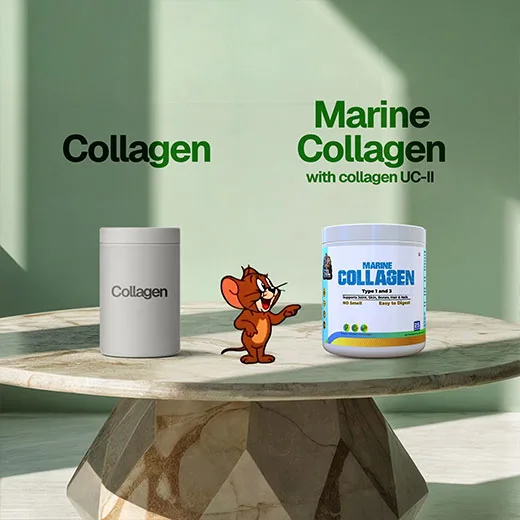
As covered in the type comparison article, marine collagen’s smaller peptide molecular weight gives it an approximately 1.5× bioavailability advantage over bovine collagen a meaningful efficiency consideration when working within an established effective dose range.
7. No Added Sugar, No Artificial Colours
Many collagen products marketed specifically to women, particularly flavoured drinks and gummies, compensate for the inherently unflavoured taste of collagen peptides with substantial added sugar. Beyond the general health considerations of added sugar, there is a specific relevance here: high sugar intake accelerates glycation – a process where sugar molecules bind to collagen fibres, making them stiffer and less functional. A collagen product with high added sugar content is, in a small but real way, working against its own stated purpose.
8. Manufacturing Transparency and Authentication
For a product taken daily over months, verifying genuine sourcing and batch quality matters – particularly in a market where supplement counterfeiting is a documented concern. Look for FSSAI approval, GMP/ISO certification, and ideally a batch-level authentication system.
India-Specific Factors for Women Specifically
The Combined UV and Hormonal Degradation Load
Indian women face two simultaneous collagen-degradation pressures that compound each other: the UV-driven MMP activation discussed in the skin dosage article (relevant to all Indian skin tones year-round), and the hormonal collagen decline discussed above. For women in the perimenopausal and postmenopausal life stages specifically, these two factors compound – declining oestrogen reduces the body’s natural MMP-inhibition capacity at the same time that UV exposure is actively driving MMP activity. This compounding effect is a reasonable basis for prioritising both collagen supplementation and consistent SPF use, particularly from the late 30s onward.
Iron Status and Indian Women’s Hair Concerns
As noted above, iron deficiency prevalence in Indian women of reproductive age is exceptionally high by global standards – driven by menstrual blood loss, often-inadequate dietary iron absorption (compounded by the same phytate-rich dietary patterns discussed in the zinc deficiency article in this series), and pregnancy-related iron demands. For Indian women specifically investigating hair loss solutions, ruling out iron deficiency is a higher-priority diagnostic step than it might be in populations with lower background iron deficiency prevalence.
Joint Health Alongside Skin: A Frequently Overlooked Combination
Indian women – particularly those balancing household physical labour, training, and the accelerated post-menopausal connective tissue changes – frequently experience both skin ageing concerns and joint discomfort simultaneously, but rarely address them as a connected picture. As covered in the brand comparison article, UC-II (undenatured Type II collagen) addresses joint cartilage through a completely different mechanism (oral tolerisation) from marine collagen’s skin and hair benefits (hydrolyzed peptide signalling). For women experiencing both concerns, a combined approach – marine collagen for skin/hair, UC-II for joints – addresses the full picture rather than treating only the more commonly marketed skin dimension.
The 5XL Nutrition Marine Collagen: Built for the Full Picture
The 5XL Nutrition Marine Collagen is formulated to address the complete set of considerations covered in this article – not narrowly targeted at skin alone, which is how most collagen marketing to women is framed.
Type I and Type III collagen from wild deep-sea fish – addressing both structural density and the elasticity that becomes increasingly relevant from the mid-30s onward.
Vitamin C included at a dose supporting the collagen synthesis pathway – removing the need to separately coordinate dietary Vitamin C timing.
Hyaluronic acid for the visible hydration and “glow” outcome that structural collagen alone does not fully address.
Biotin for the hair shaft keratin synthesis dimension that collagen-only products leave unaddressed – directly relevant to the hair concerns that bring many women to collagen supplementation in the first place.
Zero added sugar – avoiding the glycation trade-off that many flavoured collagen products introduce.
GMP + ISO certified manufacturing, FSSAI approved, with batch-level authentication at the5xlnutrition.com/verify-product – relevant for any product taken daily over months.
For women in the mid-30s and beyond specifically dealing with the hormonal acceleration of collagen decline, or those also experiencing joint discomfort, 5XL UC-II Collagen (40mg undenatured Type II) is a complementary addition addressing the joint cartilage dimension through oral tolerisation – covered in full detail in the brand comparison article in this series.
Shop 5XL Nutrition Marine Collagen | Code KSY35 for 35% off
FAQ
Q: At what age should women start taking collagen?
There’s no strict starting age, but the practical case strengthens from the mid-30s onward as endogenous collagen decline compounds and, for many Indian women, perimenopausal hormonal shifts may begin earlier than commonly cited Western age ranges suggest. Women in their 20s can reasonably use collagen as a preventive and skin-hydration strategy, though the urgency and magnitude of benefit is generally greater from the mid-30s forward, and substantially more pronounced through the menopausal transition.
Q: Does collagen help with hair loss in women?
Collagen supports the connective tissue environment surrounding hair follicles, but it is not the primary structural protein of the hair shaft (which is keratin). A collagen formula including biotin addresses both dimensions. However, if hair loss is significant or sudden, ruling out iron deficiency and thyroid dysfunction – both common in Indian women – is a more direct diagnostic priority than assuming collagen alone will resolve the issue.
Q: Does menopause really accelerate collagen loss that much?
Yes – research has documented approximately 30% skin collagen loss in the first five years following menopause, substantially faster than the general 1-1.5% annual age-related decline. This is directly attributed to the sharp decline in oestrogen, which normally stimulates fibroblast collagen production and inhibits collagen-degrading enzymes (MMPs).
Q: Can I take collagen during pregnancy or while breastfeeding?
Consult your physician before beginning any collagen supplement during pregnancy or lactation. This article provides general context on postpartum collagen and hair changes but does not constitute a recommendation for supplement use during these specific periods – medical guidance should take precedence given the individual variables involved.
Q: Is marine collagen safe for women with PCOS or thyroid conditions?
Marine collagen itself has no known direct interaction with PCOS or thyroid medication. However, since thyroid dysfunction is a common contributor to hair loss and skin changes in women, addressing the underlying thyroid condition with appropriate medical treatment is the priority – collagen supplementation can be a reasonable complementary approach but should not replace appropriate management of a diagnosed thyroid condition or PCOS.
Q: Should women take a different collagen dose than men?
The clinically effective dose range (5-10g hydrolyzed collagen daily) is not differentiated by sex in the research – it is based on body size and the dose required for measurable fibroblast signalling, which doesn’t differ meaningfully between men and women at this level. What does differ is the underlying hormonal context (oestrogen’s protective effect and its decline) that makes consistent supplementation comparatively more valuable for women at certain life stages, particularly the perimenopausal transition.
Q: What is the difference between collagen for skin and collagen for joints, for women specifically?
Skin and hair benefits come from hydrolyzed Type I and III marine collagen at 5-10g daily, working through fibroblast signalling. Joint benefits – increasingly relevant for women experiencing the post-menopausal acceleration of joint changes – come from UC-II (undenatured Type II collagen) at just 40mg daily, working through oral tolerisation, an entirely different immune-mediated mechanism. Women experiencing both concerns benefit from using both products together rather than expecting one to address both outcomes.