
D-Mannose for Kidney Health: What the Research Actually Shows, How It Works, and Why Does and Context Matter
D-Mannose is one of the most searched urinary health ingredients in India right now – and one of the most misunderstood.
Part of the confusion is marketing: some brands position D-Mannose as a standalone UTI cure. Part of it is real nuance in the research: the mechanism is well-established and biologically plausible, but the clinical evidence for standalone UTI prevention is more limited than the marketing suggests.
This article covers everything the research actually shows about D-Mannose for kidney and urinary health – including the 2024 JAMA clinical trial that raised honest questions about its standalone efficacy, why it still belongs in a multi-ingredient kidney support formula, what the right dose context is, and why pairing it with Cranberry Extract, Punarnava, and antioxidant compounds like NAC produces a meaningfully more complete urinary support approach than D-Mannose alone.
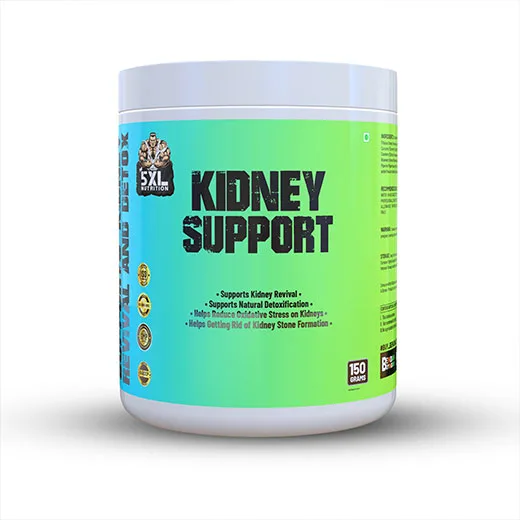
Use code GOF35 at checkout for 35% off → the5xlnutrition.com/product/kidney-support/
Does D-Mannose Work for Kidney and Urinary Health?
The mechanism is real and well-established: D-Mannose – a naturally occurring simple sugar excreted largely unchanged in urine – prevents certain bacteria (primarily E. coli) from adhering to the urinary tract wall by acting as a competitive binding decoy. Biology is sound.
The standalone clinical evidence is more limited than marketing suggests: A landmark 2024 JAMA Internal Medicine RCT (598 women, double-blind placebo-controlled) found that daily D-Mannose at 2g/day did not significantly reduce medically attended UTI recurrence versus placebo over 6 months. A 2024 meta-analysis of 6 RCTs confirmed: D-Mannose was not significantly associated with reduced UTI recurrence compared to control.
The honest position: At the doses studied for standalone UTI prevention (1-2g/day), D-Mannose’s clinical performance has not been convincingly demonstrated in large RCTs. At maintenance doses within a multi-ingredient formula – alongside Cranberry Extract, Punarnava, Varuna, Neem, NAC, and a herbal anti-inflammatory layer – D-Mannose contributes to a multi-mechanism urinary and kidney wellness approach that no single ingredient delivers alone.
D-Mannose is not a UTI treatment. It is not a substitute for antibiotics in an active infection. It is a urinary environment support ingredient – most useful within a comprehensive daily kidney support protocol, not as a standalone intervention.
What Is D-Mannose? The Biochemistry Behind the Ingredient
D-Mannose is a simple monosaccharide – a six-carbon sugar that occurs naturally in fruits including cranberries, apples, peaches, and blueberries. It is structurally similar to glucose but metabolised very differently: while glucose is taken up rapidly by cells for energy production, D-Mannose is poorly phosphorylated by hexokinase – the enzyme that initiates glucose metabolism and therefore passes through the body largely unmetabolised.
The result: after oral consumption, approximately 90% of D-Mannose enters the bloodstream essentially unchanged, is filtered by the kidneys, and appears in high concentrations in urine within 30-60 minutes. This is the property that makes it relevant to urinary tract health – it delivers a high urinary concentration of a specific sugar molecule at the location where its proposed mechanism operates.
The Chemical Distinction from Glucose
- Glucose: Rapidly phosphorylated → enters glycolysis → used for energy or stored
- D-Mannose: Poorly phosphorylated → minimal cellular uptake → passes to kidney filtration → excreted in urine largely intact
This metabolic bypass is why D-Mannose does not produce a significant blood glucose spike at standard doses in healthy adults. It also explains why its mechanism of action is urinary rather than systemic.
Safety note for diabetics: Despite its minimal metabolic effect in healthy adults, people with diabetes or insulin resistance should consult a healthcare provider before regular D-Mannose use.
How D-Mannose Works: The Anti-Adhesion Mechanism
The E. coli Fimbriae Mechanism
E. coli is responsible for approximately 80-85% of urinary tract infections. E. coli bacteria express hair-like surface structures called type 1 fimbriae, each tipped with a protein called FimH. FimH has a high binding affinity for mannose residues – specifically the mannose sugar components of uroplakin proteins on the surface of bladder epithelial cells.
When E. coli FimH binds to mannose receptors on bladder cells, the bacteria anchor themselves to the urinary tract wall and begin colonising. This adhesion step is essential for infection – bacteria that cannot adhere are flushed out during urination.
D-Mannose’s proposed role: When D-Mannose is present in high concentrations in urine, E. coli FimH preferentially binds to the free D-Mannose molecules in solution rather than to the mannose receptors on bladder cell surfaces. The bacteria bind to D-Mannose, are suspended in urine rather than anchored to the bladder wall, and are flushed out during urination before colonisation can occur.
This mechanism is well-characterised in laboratory and animal models. D-Mannose does not kill bacteria – it removes the adhesion advantage that allows bacteria to establish infection.
The Critical Limitation of the Mechanism
The E. coli FimH mechanism is relevant primarily for type 1 fimbriated E. coli. It does not apply to non-E. coli uropathogens (Klebsiella, Proteus, Enterococcus – together approximately 15-20% of UTIs) or E. coli strains expressing P-fimbriae (which cause approximately 70-80% of pyelonephritis – upper urinary tract infection).
This mechanistic specificity is one reason the clinical trial evidence for broad UTI prevention is weaker than the in vitro mechanism would suggest.
What the Clinical Research Actually Shows – The Honest Evidence Review
The Pre-2024 Evidence
A notable 2014 RCT (World Journal of Urology, Kranjčec et al., 308 women) compared D-Mannose powder (2g/day for 6 months) to nitrofurantoin and no prophylaxis in women with recurrent UTIs. The D-Mannose group showed significantly fewer recurrences than the no-prophylaxis group. However, the study was open-label (no blinding) with a no-treatment rather than placebo comparator – meaning placebo effect could not be separated from active treatment effect.
The 2024 JAMA Internal Medicine Trial – The Critical Update
Study design: 598 women with recurrent UTIs. Double-blind, placebo-controlled. Daily D-Mannose 2g/day versus matched placebo for 6 months.
Result: 51.0% of the D-Mannose group experienced a medically attended UTI versus 55.7% in the placebo group – a 4.7 percentage point difference that did not reach statistical significance (95% CI: -13% to 3%).
2024 meta-analysis: 6 RCTs pooled (1,167 participants) reached consistent conclusions – D-Mannose was not significantly associated with reduced UTI recurrence compared to control.
What This Means – and Doesn’t Mean
This evidence does not mean D-Mannose “doesn’t work.” It means:
- At 2g/day as a standalone intervention, D-Mannose did not demonstrate significant clinical benefit over placebo in the best-powered trial conducted to date.
- The FimH mechanism is still biologically valid – the issue may be insufficient urinary concentration at oral doses, or insufficient coverage of non-FimH uropathogens.
- D-Mannose within a multi-ingredient formula at maintenance doses represents a different use case than standalone UTI prevention prophylaxis.
- D-Mannose is not a UTI treatment – antibiotics remain the appropriate medical intervention for active diagnosed UTI.
D-Mannose + Cranberry Extract: Why They’re Paired and What the Evidence Shows
Complementary Mechanisms, Not Identical
Cranberry extract contains A-type proanthocyanidins (PACs) – polyphenol compounds that prevent P-fimbriated E. coli from adhering to uroepithelial cells. Crucially, PACs operate on a different fimbriae type (P-fimbriae) from D-Mannose’s FimH target (type 1 fimbriae):
| Ingredient | Targeted fimbriae type | Primary pathogen target |
| D-Mannose | Type 1 fimbriae (FimH) | E. coli causing cystitis (bladder infection) |
| Cranberry PACs | P-fimbriae | E. coli causing pyelonephritis + some cystitis |
| Combined | Type 1 + P-fimbriae | Broader E. coli coverage across UTI types |
A 2023 Cochrane review update found that cranberry products significantly reduced UTI frequency versus placebo, particularly in women with recurrent UTIs – a modestly stronger evidence base than standalone D-Mannose at the current RCT quality level.
In The 5XL Kidney Support
The 5XL Kidney Support contains both D-Mannose (200mg) and Cranberry Extract (200mg) per 5g scoop – alongside Neem Extract (100mg, antimicrobial against E. coli), Varuna Bark (200mg, urinary flow), Nettle Root (200mg, diuretic), and Punarnava (150mg, diuretic and nephroprotective). This multi-ingredient approach targets the urinary tract through five complementary mechanisms rather than relying on either D-Mannose or Cranberry alone.
D-Mannose + Punarnava: The Ayurvedic-Clinical Combination
D-Mannose addresses urinary tract health from the bacterial adhesion angle. Punarnava (Boerhavia diffusa) addresses it from the fluid balance and nephroprotective angle – complementary rather than competing mechanisms.
What Punarnava Contributes
Diuretic action: Punarnava’s active compound punarnavine has demonstrated diuretic properties – increasing urinary output and promoting fluid clearance. This “flow and flush” effect directly complements D-Mannose’s anti-adhesion mechanism: D-Mannose provides a competitive binding target that bacteria attach to instead of the bladder wall; Punarnava’s diuresis flushes bacteria-bound D-Mannose out of the urinary system more rapidly.
Nephroprotective effects: A 2023 systematic review confirmed Punarnava’s nephroprotective effects across in vitro, in vivo, and clinical studies – including documented GFR improvement and serum creatinine reduction. A 2024 in silico study in Toxicology International demonstrated significant binding affinity of Punarnava bioactive compounds to key CKD-related receptors (Renin, ACE II, CA II).
Anti-inflammatory action: Punarnava reduces inflammatory markers relevant to urinary tract inflammation – supporting recovery from the inflammatory response that accompanies bacterial adhesion events.
The Combined Coverage Map
| Mechanism | D-Mannose | Punarnava |
| Bacterial adhesion prevention | Competitive FimH binding | Not primary mechanism |
| Urinary flow enhancement | Not a diuretic | Diuretic via punarnavine |
| Kidney tissue protection | Not nephroprotective | GFR support, creatinine reduction |
| Anti-inflammatory urinary | Limited | Documented |
Together, the combination covers anti-adhesion, flow-and-flush, kidney tissue protection, and anti-inflammatory support – which neither ingredient covers in isolation.
D-Mannose Dosage: What the Evidence Actually Supports
Context 1: Acute UTI Treatment
Not supported. D-Mannose is not a substitute for antibiotics in an active, diagnosed UTI. If you have UTI symptoms, see a doctor.
Context 2: Standalone UTI Prevention (High Dose)
Doses studied: 1-2g/day. Evidence: 2024 JAMA RCT and meta-analysis found no statistically significant reduction in UTI recurrence at 2g/day versus placebo. Standalone prevention evidence is currently insufficient to support this use with confidence.
Context 3: Daily Urinary Maintenance within a Multi-Ingredient Formula
Doses: 100-500mg/day as one of several urinary support ingredients.
The 5XL Kidney Support dose: 200mg per 5g scoop – within the maintenance range.
In a multi-ingredient formula where D-Mannose is one of eight or more urinary and kidney support ingredients, the dose required to contribute meaningful anti-adhesion support may be lower than in a standalone prevention protocol – because complementary mechanisms (Cranberry PACs, Punarnava diuresis, Neem antimicrobial, NAC antioxidant) simultaneously reduce the bacterial adhesion burden through different pathways.
The honest disclosure: At 200mg/day, 5XL Kidney Support should be understood as a comprehensive daily kidney and urinary support supplement – not as a clinical UTI prevention intervention.
D-Mannose Safety: What to Know Before Use
For healthy adults: Generally well-tolerated at standard doses. No serious adverse effects reported in clinical trials at doses up to 2g/day. Mild GI effects (loose stool, bloating) at higher doses in some individuals.
For diabetics: Consult a healthcare provider before regular use. Despite minimal glycaemic impact in healthy adults, evidence for blood glucose neutrality at high doses in diabetic populations is not conclusive.
Not a substitute for medical treatment: Never use D-Mannose to self-treat a suspected active UTI. Untreated UTIs can progress to pyelonephritis and serious complications. Consult a doctor for active infection symptoms.
Pregnancy and nursing: Insufficient safety data – avoid without medical consultation.
Full Comparison: D-Mannose vs Other Urinary and Kidney Ingredients
| Ingredient | Primary mechanism | UTI prevention evidence | Kidney tissue protection | Best use context |
| D-Mannose | FimH competitive binding (type 1) | Limited (2024 JAMA negative RCT) | None | Multi-ingredient maintenance formula |
| Cranberry PACs | P-fimbriae anti-adhesion | Modest positive (Cochrane 2023) | Antioxidant polyphenols | Combined with D-Mannose |
| Punarnava | Diuretic, nephroprotective, anti-inflammatory | Moderate (systematic reviews) | GFR support | Urinary flow + kidney tissue |
| Varuna Bark | Stone prevention, urinary flow | Moderate (Ayurvedic clinical) | Stone pathway inhibition | Stone risk + flow |
| Neem Extract | Antimicrobial (E. coli + others) | Pharmacological evidence | Antioxidant | Broad antimicrobial complement |
| NAC | Glutathione precursor | Strong (Kidney Int Reports 2024) | Tubular cell protection | Primary kidney antioxidant |
| Astragalus | Nephroprotective, anti-fibrotic | Moderate-Strong (clinical trials) | Kidney tissue protection | Most researched kidney-protective herb |
D-Mannose is strongest in combination. In a formula alongside Cranberry (complementary anti-adhesion), Punarnava (flow-and-flush + nephroprotection), NAC (antioxidant kidney protection), and Astragalus (nephroprotection) – D-Mannose’s contribution is additive to a multi-mechanism approach that no single ingredient provides alone.
D-Mannose Relevance for Indian Gym-Goers and High-Protein Consumers
The Concentrated Urine Problem
High-protein diets generate elevated urea loads filtered by the kidneys. In the absence of sufficient fluid intake, this produces concentrated urine – reducing flushing frequency and volume, creating a more favourable environment for bacterial colonisation.
For Indian gym-goers consuming 150-200g protein daily, training in India’s heat, and managing fluid intake across chai consumption and pre-workout supplements – chronic mild urinary concentration is a realistic daily condition.
D-Mannose in concentrated urine theoretically functions with higher competitive binding pressure – greater urinary D-Mannose concentration per unit volume increases the relative binding advantage over mannose receptors on bladder cell surfaces. This has not been directly tested in clinical research but follows from the known concentration-dependent nature of competitive inhibition.
UTI Risk During Training
Dehydration during training reduces urinary flow and volume, allowing bacteria more time to adhere before being flushed. Post-workout sweating reduces systemic hydration further. D-Mannose’s continuous daily presence in urine – from a maintenance-dose kidney support supplement – provides ongoing anti-adhesion support across the full day including the dehydrated training windows.
FAQ
Q: What is D-Mannose and how does it work for kidney and urinary health?
D-Mannose is a naturally occurring simple sugar found in fruits including cranberries and apples. It passes through the body largely unmetabolised and appears in concentrated form in urine. Its primary proposed mechanism for urinary health is competitive inhibition of E. coli type 1 fimbriae (FimH) adhesion to the urinary tract wall – E. coli bacteria bind to D-Mannose in urine rather than to bladder wall receptors, and are flushed out during urination. The mechanism is biologically well-established. However, the 2024 JAMA Internal Medicine RCT (598 women, double-blind placebo-controlled) found that standalone D-Mannose at 2g/day did not significantly reduce UTI recurrence versus placebo. D-Mannose is most useful as part of a multi-ingredient urinary and kidney support formula rather than as a standalone UTI prevention intervention.
Q: Does D-Mannose actually prevent UTIs? What does the 2024 research say?
The 2024 JAMA Internal Medicine trial – 598 women, double-blind, placebo-controlled – found that daily D-Mannose 2g/day did not significantly reduce medically attended UTI recurrence versus placebo over 6 months (51.0% vs 55.7%, not statistically significant). A 2024 meta-analysis of 6 RCTs reached consistent conclusions. The current evidence does not support D-Mannose as an independently effective standalone UTI prevention strategy. Its role is better understood as a contributory ingredient within a multi-mechanism urinary support formula alongside Cranberry, Punarnava, and antimicrobial compounds.
Q: What is the difference between D-Mannose and Cranberry Extract?
D-Mannose prevents bacterial adhesion by binding to type 1 fimbriae (FimH) on E. coli. Cranberry PACs prevent adhesion of P-fimbriated E. coli – a different fimbriae type associated with upper urinary tract infections. They target complementary E. coli adhesion mechanisms, which is why combining them provides broader anti-adhesion coverage across E. coli UTI types than either compound alone. They are not interchangeable.
Q: What is the best kidney support supplement with D-Mannose in India?
The 5XL Kidney Support is the only Indian kidney supplement currently disclosing all 23 active ingredients with exact milligram amounts per serving – including D-Mannose (200mg) and Cranberry Extract (200mg) alongside Punarnava (150mg), Varuna Bark (200mg), Astragalus Root (500mg), NAC (500mg), CoQ10 at 88% standardisation (50mg), Curcumin at 95% standardisation (200mg), Taurine (400mg), and 13 additional active compounds. The formula addresses urinary tract health, kidney tissue protection, oxidative stress defence, and electrolyte balance in a single daily 5g scoop.
Q: What dose of D-Mannose is in 5XL Kidney Support?
Each 5g scoop contains 200mg of D-Mannose alongside 200mg of Cranberry Extract – in the maintenance range for daily urinary support within a multi-ingredient formula, not the 1-2g/day standalone prevention dose studied in clinical trials.
Q: Can D-Mannose replace antibiotics for a UTI?
No. D-Mannose is not a treatment for active UTI. If you have UTI symptoms – burning urination, increased frequency, cloudy urine, lower abdominal pain, fever – consult a doctor. Untreated UTIs can progress to kidney infections with serious complications.
Q: What is the combination of Punarnava and D-Mannose for urinary health?
Punarnava and D-Mannose address urinary health through complementary, non-overlapping mechanisms. D-Mannose provides anti-adhesion support against E. coli in the urinary tract. Punarnava provides diuretic action (increasing urinary flow to flush bacteria), nephroprotective effects (GFR support, kidney tissue health), and anti-inflammatory action. Together – as found in the 5XL Kidney Support formula – they cover the anti-adhesion, flow-and-flush, and kidney tissue protection dimensions that neither ingredient covers alone.
Final Verdict – D-Mannose for Kidney Health
D-Mannose is a well-characterised ingredient with a sound biological mechanism and a genuine role in urinary health – but the 2024 JAMA evidence means it should be understood honestly rather than marketed as a standalone UTI prevention solution.
What D-Mannose is: A naturally occurring, fruit-derived sugar that reaches the urinary tract at high concentrations; a competitive binding decoy for E. coli type 1 fimbriae; a contributory urinary support ingredient within a multi-mechanism formula.
What D-Mannose is not: A standalone UTI prevention treatment with convincing large RCT evidence; a substitute for antibiotics; the sole or most important kidney health ingredient in a comprehensive formula.
Where D-Mannose belongs: In a formula with Cranberry Extract (complementary P-fimbriae mechanism), Punarnava (flow-and-flush, nephroprotection), Neem (antimicrobial), NAC (kidney antioxidant defence), Astragalus (kidney tissue protection), and Varuna (stone prevention) – covering the full spectrum of kidney and urinary health needs rather than any one pathway in isolation.
That is exactly what 5XL Kidney Support provides.
Shop The 5XL Kidney Support
The 5XL Kidney Support – 23 disclosed active ingredients including D-Mannose 200mg + Cranberry Extract 200mg + Punarnava 150mg + NAC 500mg + Astragalus 500mg + CoQ10 88% + Curcumin 95% + 16 additional compounds. One 5g scoop daily with water.
Further reading:
- 5XL Kidney Support: Research Behind All 23 Ingredients →
- Kidney Health Guide for Indian Gym-Goers on High-Protein Diets →
Verify your product at the5xlnutrition.com/verify-product