Can I Take Creatine Without Protein? Complete Guide for Indian Gym-Goers (2026)
You want to start supplementing but aren’t sure if you need both creatine and protein – or if creatine alone is enough. Maybe you get enough protein from food, whey protein is outside your budget, you just want to start simple.
The answer is clear: yes, you can absolutely take creatine without a protein supplement – and for many Indian gym-goers, creatine alone is an excellent and entirely sufficient starting point.
But there’s a fuller picture that will help you make a much better decision – not just about whether you can, but about what combination will actually deliver the results you’re training for.
Buy The 5XL Nutrition Creatine Monohydrate → pure, micronized, no fillers, verified genuine.
The Direct Answer
Yes, completely, safely, and effectively.
Creatine and protein are two entirely independent supplements with completely different mechanisms. Neither depends on the other to work. The confusion arises because they’re often sold and marketed together. They are complementary – each makes the other more effective – but complementary is not the same as dependent.
Creatine works by increasing phosphocreatine stores in your muscle cells, allowing faster regeneration of ATP – the cellular energy used during explosive, high-intensity exercise. This process happens entirely within your energy metabolism system. Protein has no involvement in this pathway.
Protein supplements exist to help people who can’t meet their daily protein requirement through food alone. If your diet already covers your protein needs, you don’t need a protein supplement for creatine to work.
What Each Supplement Actually Does
Understanding what each supplement is responsible for is the key to making the right decision.
What creatine does – energy system performance:
- More strength per set – increased phosphocreatine enables faster ATP regeneration
- More reps per set – sustained energy output before fatigue
- Faster recovery between sets – phosphocreatine replenishes quicker
- Increased training volume – more total work capacity per session
- Cognitive support – brain phosphocreatine improves mental energy and focus
Creatine improves what you can do in training. It doesn’t directly build muscle – but by enabling you to train harder and with more volume, it creates the stimulus that leads to greater muscle development over time.
What protein does – muscle repair and recovery:
- Muscle protein synthesis – amino acids as substrate for muscle repair
- Recovery from training – damaged fibre repair, especially post-workout
- Lean muscle retention – anti-catabolic effect during calorie deficits
- Immune function, hormonal balance, hair and skin health – ongoing daily requirements
The key insight: Creatine and protein address different phases of the muscle-building process. Creatine optimises the training stimulus – what happens in the gym. Protein optimises the recovery response — what happens after the gym. Taking creatine without a protein supplement is perfectly effective if your food already provides adequate protein for recovery.
When Taking Creatine Without a Protein Supplement Makes Complete Sense
Your diet already meets your protein target If you regularly eat 3-4 eggs daily, 150-200g of paneer, chicken, fish, or meat per day, plus dal and curd throughout the day – and you weigh 65kg – you may already be hitting 80-100g of protein through food. Calculate your approximate food protein first. If you’re consistently meeting 1.2-1.6g per kg bodyweight through meals, a protein supplement adds nothing. Creatine alone is the right next step.
You’re a beginner focusing on one supplement at a time Starting everything at once makes it impossible to know what’s working and often leads to poor compliance. For beginners, creatine alone is a logical, structured approach – it delivers noticeable, measurable strength improvements within 2-4 weeks, costs very little, and allows you to establish food protein habits before making further supplement decisions.
You’re in a fat loss or cutting phase During calorie restriction, creatine directly supports two priorities: maintaining strength output and reducing muscle loss from performance drops. It delivers critical performance and muscle preservation benefits for near-zero caloric and financial cost. If food protein during cutting is adequate, creatine alone is strategically sound.
You have digestive sensitivity to whey protein If you’ve had bloating or discomfort from dairy-derived proteins, creatine alone is a clean, low-risk supplement that won’t cause digestive issues for the vast majority of users. Note: if you do want to try protein supplementation, Whey Protein Isolate – which removes most lactose – is often well-tolerated by those sensitive to concentrate.
You’re on a tight budget Creatine monohydrate is the most cost-effective performance supplement available. If you’re choosing between the two and your food protein is adequate, creatine delivers more measurable and immediate performance per rupee than protein supplementation in this scenario.
What Results to Expect From Creatine Alone
Weeks 1-2 (Saturation Phase): Weight may increase 0.5-1.5kg from intramuscular water retention as creatine saturates muscle cells. This is not fat gain – it’s functional, performance-supporting muscle hydration. Some users notice slightly better endurance in later sets.
Weeks 2-4 (Performance Improvement Phase): Noticeable strength increases – typically 5-10% improvement in working weights across compound lifts. One to three additional reps per set. Faster recovery between sets and better performance in the second half of training sessions.
Weeks 4-8 (Accumulation Phase): Training volume increases as improved performance compounds. Lean mass gains begin reflecting higher training volume. Strength improvements become measurable across all major lifts.
The honest caveat: Creatine improves training capacity. Whether that translates into maximum muscle growth depends on whether adequate protein – from food or supplements – is available for recovery. Creatine with adequate protein (from any source) always outperforms creatine with insufficient protein.
The Optimal Approach: Creatine + Protein Together
If your food protein is insufficient – and for most Indians eating typical diets, it is – adding a protein supplement alongside creatine produces meaningfully superior results.
The logic: creatine enables more training volume → more volume creates a stronger muscle-building stimulus → adequate protein provides the amino acid substrate to capitalise on that stimulus → more muscle growth results. Remove either link and the process is less efficient.
Research on the combination is consistent:
| Metric | Creatine Only | Creatine + Adequate Protein |
| Strength gain (8 weeks) | +8-12% | +12-18% |
| Lean muscle gain (8 weeks) | +0.5-1.2kg | +1.0-2.0kg |
| Recovery speed | Improved | Significantly improved |
| Body composition | Good | Excellent |
Starter Stack (Strength + Muscle Building): The 5XL Creatine Monohydrate + The 5XL Whey Protein Concentrate – 3-5g creatine daily, 1 scoop protein post-workout. Best value combination for beginners and intermediate gym-goers.
Clean Gains Stack (Fat Loss + Muscle Preservation): The 5XL Creatine Monohydrate + The 5XL Whey Protein Isolate – maximum protein with minimum calories from both supplements. Ideal for cutting phases or calorie-controlled goals.
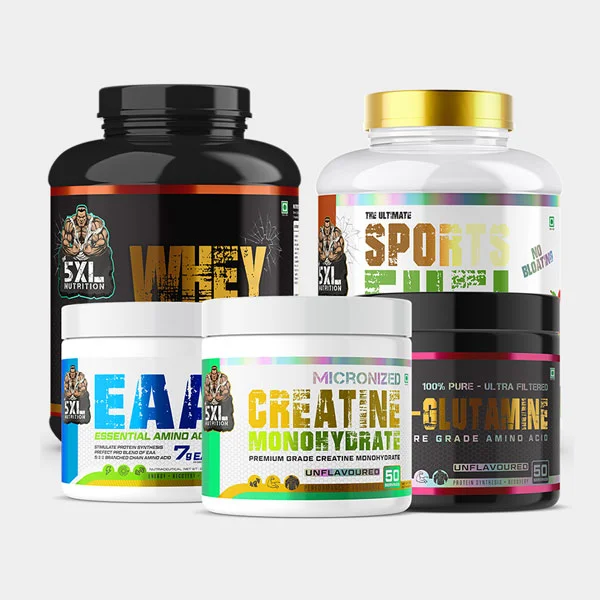
Explore Muscle Building Combo Packs → bundle creatine with protein for maximum savings.
How to Use Creatine Correctly
Dosage:
| User Type | Daily Dose | Notes |
| Beginners / most users | 3-5g | Optimal for full saturation |
| Athletes above 90kg | 5g | Standard dose remains effective |
| Loading (optional) | 20g for 5-7 days, then 3-5g | Reaches saturation faster, not required |
Timing: Creatine has no critical timing window. Post-workout is most popular and convenient – especially when combined with a protein shake. Any consistent daily time beats sporadic use at the “perfect” time. Take it on rest days too – daily consistency is the most important variable.
Hydration: 3-4 litres of water daily while supplementing. Creatine draws water into muscle cells – inadequate hydration reduces effectiveness and increases the risk of minor digestive discomfort.
Stacking with protein: Simply mix 3-5g of creatine into your post-workout protein shake. One action, two supplements addressed simultaneously.
Why The 5XL Nutrition for Both
The 5XL Creatine Monohydrate: Pure micronized creatine monohydrate – single ingredient, no fillers. Superior dissolution for comfortable daily use. Every batch verifiable at the5xlnutrition.com/verify-product. Priced honestly without import or influencer markup.
The 5XL Protein Range: Accurate protein content with no amino spiking or inflated serving sizes. Options for every goal – Concentrate for budget and bulk, Isolate for cutting and sensitive stomachs, Performance Whey for active training. Indian-made for Indian dietary profiles and digestive systems.
Final Verdict
You can take creatine without a protein supplement – and for many people, it is the right starting point.
The right choice depends on your food protein intake. If you’re consistently meeting 1.2g+ per kg bodyweight through meals, creatine alone is a complete and excellent supplement choice. your food protein is consistently low – common with Indian vegetarian diets and busy urban schedules – buy both from the start. If budget is the constraint, start with creatine and add protein when budget allows.
Creatine is not dependent on protein. But your muscle-building results depend on having both an adequate training stimulus (creatine’s contribution) and adequate recovery substrate (protein’s contribution) – whether that protein comes from food or supplements.
FAQ
Q: Will creatine build muscle without a protein supplement?
Creatine supports muscle building indirectly by improving training performance. Muscle is built from amino acids – if food protein is adequate (1.2g+ per kg bodyweight daily), creatine alone supports good muscle development. If food protein is consistently low, adding a protein supplement produces meaningfully better results.
Q: Which should I buy first – creatine or protein?
Assess your food protein intake first. If you regularly eat protein-rich foods and approach your daily target, start with creatine. If your food protein is consistently low – common with Indian vegetarian diets – start with protein or buy both together.
Q: Can I mix creatine into my protein shake?
Yes – this is one of the most convenient and popular approaches. Mix 3-5g creatine into your post-workout protein shake. They are fully compatible, and the carbohydrates in some protein formulas marginally enhance creatine uptake.
Q: Does creatine contain protein?
No. Creatine monohydrate is a completely separate compound. Pure creatine supplements contain no protein – it is an entirely different class of supplement.
Q: Is creatine safe without a protein supplement?
Yes. Creatine’s safety profile is independent of protein intake. It is safe for healthy adults at recommended doses (3-5g daily) regardless of dietary or supplement protein intake.
Q: How long does creatine take to work without protein?
The same timeline as with protein: strength improvements typically become noticeable within 2-4 weeks of consistent daily dosing. Creatine’s mechanism is completely independent of protein intake.
Q: What if my protein intake is very low while taking creatine?
You’ll still experience creatine’s performance benefits – more reps, more strength, faster set recovery. However, the muscle growth that this improved training stimulus should produce will be limited by insufficient protein for recovery. Both the training stimulus and the recovery substrate need to be present for maximum muscle development.