Best Whey Protein Without Side Effects – The Complete Troubleshooting Guide
You’ve Heard Bad Things About Whey Protein. Some Are True. Most aren’t.
Your gym senior told you it damages the kidneys. Your mother thinks it’s full of steroids. Colleague said his friend got acne from it. And somewhere in the back of your mind, you’re wondering: is protein powder actually safe – or is everyone just pretending it is to sell more tubs?
Here’s the straightforward truth: most side effects people attribute to whey protein are either myths, the result of using the wrong product, or caused by using a genuinely good product the wrong way.
This guide addresses every real concern – not with marketing reassurance, but with the actual biological explanation of what happens, what causes it when it does, and exactly what to do about it.
The Side Effects That Are Real – What Causes Them and How to Fix Each One
Bloating and Gas – The Most Common Complaint
Is it real? Yes, for some people, some of the time.
The primary cause is lactose. Whey protein concentrate contains 3-8% lactose. Lactose requires the enzyme lactase to break it down, and Indians as a population have relatively high rates of lactase insufficiency – many people don’t produce enough to fully digest a full serving of concentrate. Undigested lactose passes to the colon, where bacteria ferment it, producing gas, bloating, and sometimes loose stools.
Secondary causes include excessive serving size, poor quality protein with heavy fillers and artificial additives, mixing with milk (adding more lactose on top of an already lactose-heavy serving), and drinking too quickly.
The solution:
- Switch to whey protein isolate – under 1g lactose per serving eliminates the issue for most lactose-sensitive individuals
- Mix with water instead of milk
- Start with half a scoop and build tolerance gradually
- Add a digestive enzyme supplement containing lactase alongside your protein
Stomach Discomfort or Heaviness
Beyond lactose, some people experience heaviness or nausea from high fat content in lower-grade concentrates, artificial sweeteners like sucralose that some people find irritating to the gastrointestinal lining at daily doses, excessive single-dose protein beyond what the gut can efficiently process, or taking protein on a completely empty stomach.
The solution:
- Choose isolate over concentrate for a lighter macro and fat profile
- Look for protein sweetened with stevia rather than sucralose
- Take protein with a small amount of food rather than completely fasted
- Don’t exceed 30-35g per serving – digestive efficiency drops above this
Acne – The Concern That Has Some Evidence Behind It
There is genuine, though modest, research suggesting a link between whey protein and acne in people already prone to it. The proposed mechanism: whey stimulates IGF-1 and insulin, both of which can increase sebum production – a factor in acne development.
Important context: the association is most significant in people with existing hormonal acne or genetic predisposition. It is not universal – the majority of whey protein users experience no skin changes whatsoever. The link is also stronger with concentrate than with isolate.
The solution:
- If you notice a consistent correlation between whey and breakouts, switch to isolate
- Consider reducing overall dairy intake alongside supplementation
- Ensure adequate zinc intake – zinc is strongly anti-acne and frequently deficient in Indians
- If acne persists significantly, consult a dermatologist – hormonal causes unrelated to protein are far more common
The Myths – Debunked Clearly and Once and For All
Myth: Whey Protein Damages the Kidneys
This myth originated from a genuine medical fact that has been massively overapplied: people with existing chronic kidney disease (CKD) do need to limit dietary protein, as impaired kidneys struggle to excrete urea – a protein metabolism byproduct.
In healthy individuals with normal kidney function, multiple systematic reviews and long-term clinical studies confirm that high protein intake – including from whey – does not cause or accelerate kidney disease. The kidneys of a healthy person are extraordinarily efficient at processing protein metabolites.
Unless you have diagnosed CKD, diabetic nephropathy, or another condition affecting kidney function, your kidneys are not at risk from normal whey protein use. Precaution for everyone: stay well-hydrated (2.5-3.5 litres daily on a high-protein diet) and if you have any family history of kidney disease, get a basic kidney function panel done annually.
Myth: Whey Protein Causes Hair Loss
Whey protein itself does not cause hair loss. Hair loss is primarily driven by genetics (androgenetic alopecia – the most common cause by far), hormonal imbalances including DHT sensitivity and thyroid disorders, nutritional deficiencies especially iron, zinc, and B12 (extremely common in India), and extreme calorie restriction causing telogen effluvium.
Some protein supplements contain added creatine or DHEA, which can slightly elevate DHT in genetically predisposed individuals – potentially accelerating male pattern hair loss. This is a creatine or DHEA effect, not a whey effect.
The solution: Choose a pure whey protein without added creatine or hormonal compounds. If hair loss is a concern, check for iron and zinc deficiency, very common in Indian women, and consult a dermatologist or endocrinologist for an accurate diagnosis.
Myth: Whey Protein Contains Steroids
Legitimate, lab-tested whey protein from a reputable brand contains zero anabolic steroids. Steroids are controlled substances not permitted in food supplements and are illegal without prescription in India.
This myth persists because some people experience noticeable muscle changes with protein and training and assume something “extra” must be in the product – and because counterfeit supplements from unknown sources genuinely may contain undisclosed substances. This is precisely why product authentication matters.
Protection: Buy only from verifiable brands. Use product authentication systems before opening any supplement. If a product is dramatically cheaper than market rate or sold through unofficial channels, the risk of adulteration is real.
Myth: Whey Protein Causes Liver Damage
There is no evidence that moderate whey protein consumption causes liver damage in healthy individuals. Like the kidney myth, this concern applies specifically to people with pre-existing liver disease – for whom high protein intake of any kind should be medically managed. For healthy people, the liver efficiently metabolises amino acids from whey protein as part of normal daily function.
How to Use Whey Protein With No Side Effects – The Practical Protocol
| Situation | Solution |
| Bloating with concentrate | Switch to whey isolate |
| Gas after mixing with milk | Mix with water instead |
| Heaviness or nausea | Take with light food; reduce to 1 scoop |
| Acne in acne-prone individuals | Switch to isolate; reduce dairy; check zinc |
| Concerned about kidneys | Stay hydrated; get annual kidney panel |
| Concerned about hair loss | Use pure whey (no added creatine/DHEA); check iron and zinc |
| Concerned about steroids | Buy from verified brands with authentication |
Dosage guidance:
- 1 scoop (25-30g) per serving
- 1-2 servings per day for most people
- Total daily protein from all sources: 1.6-2.0g per kg of bodyweight
- Drink 250-300ml water per scoop
Shop Genuine Whey Protein at The 5XL Nutrition
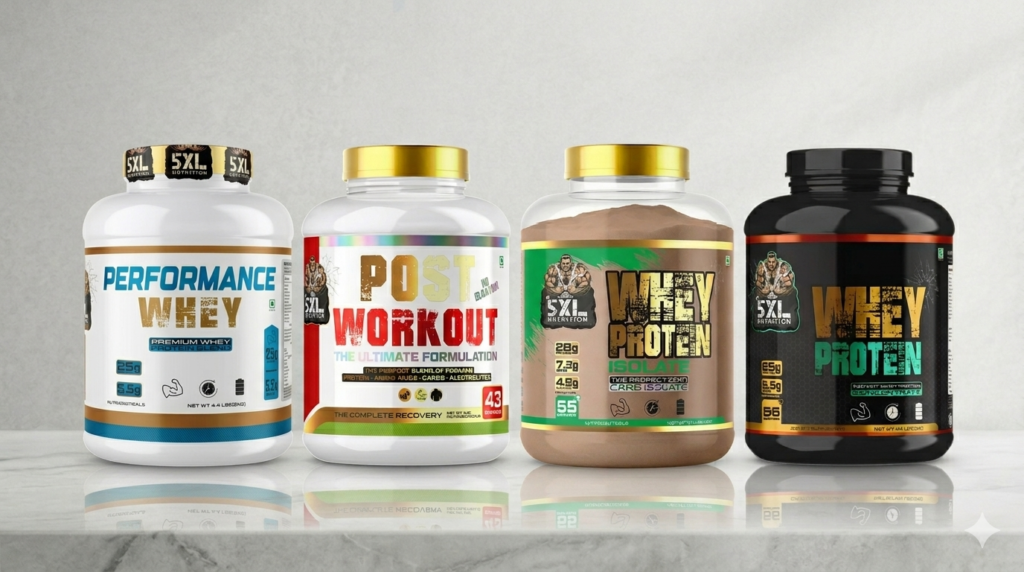
Whey Protein Concentrate – ideal for most gym-goers without lactose sensitivity, budget conscious buyers, and those in a bulking phase.
Whey Protein Isolate – under 1g lactose per serving, ideal for lactose-sensitive individuals, those in a cutting phase, and anyone who has experienced digestive discomfort with concentrate.
Every The 5XL Nutrition product is lab-tested, transparently labelled, and verifiable for authenticity before you open it – addressing the most common source of genuine supplement concerns in the Indian market.
Final Thought
Whey protein is one of the most extensively studied nutritional supplements in the world. Used correctly, from a quality and verified source, it is safe for the vast majority of healthy adults.
The “side effects” people attribute to whey protein are almost always lactose causing digestive discomfort (solution: switch to isolate), poor quality products with fillers and additives (solution: choose transparent brands), counterfeit or adulterated supplements (solution: authenticate before you open), or myths that persist despite contradicting evidence (solution: check the science).
Choose quality. Use it correctly. Verify what you’re buying.
FAQs
Q1. Which whey protein causes the least side effects?
Whey protein isolate consistently produces the fewest side effects. It contains under 1g of lactose per serving – eliminating the primary cause of bloating and gas – has lower fat content reducing heaviness, and delivers a cleaner overall macro profile. For anyone experiencing digestive discomfort with concentrate, switching to isolate resolves the issue in the vast majority of cases.
Q2. Does whey protein cause acne?
It can – in people already prone to acne due to hormonal factors or genetics. The mechanism involves IGF-1 and insulin stimulation increasing sebum production. The effect is more pronounced with concentrate and with higher overall dairy intake. Switching to isolate, reducing dairy, and ensuring adequate zinc intake typically addresses it. If acne is severe or persistent, consult a dermatologist – hormonal causes unrelated to protein are far more common.
Q3. Is whey protein safe for kidneys in healthy Indians?
Yes, for healthy individuals with normal kidney function. Multiple systematic reviews confirm that moderate to high protein intake does not cause or worsen kidney disease in healthy people. Stay well-hydrated and get an annual kidney function check if you have any family history of kidney issues or are on a very high protein intake.
Q4. What should I do if whey protein causes bloating?
Four steps resolve bloating for the vast majority of users: switch from concentrate to isolate, mix with water instead of milk, reduce serving size initially to half a scoop, and add a digestive enzyme supplement containing lactase. If discomfort persists on isolate, a non-dairy protein source may suit you better.
Q5. Does whey protein contain steroids?
No, legitimate, verified whey protein from reputable brands contains zero anabolic steroids. These are controlled substances not permitted in food supplements. The concern is valid for counterfeit or unverified products from unofficial sources. Verify your product using the 5XL Nutrition authentication portal before opening to confirm what’s inside.
Q6. Can I take whey protein every day without side effects?
Yes, for healthy adults at recommended doses of 1-2 scoops daily, with total daily protein from all sources within 1.6-2.0g per kg of bodyweight. The key factors are choosing the right type (isolate if lactose sensitive), using the correct dose, staying well-hydrated, and buying from a verified brand with transparent labelling.