100% Natural Whey Protein – What “Natural” Really Means on a Label
“Natural” Is One of the Most Abused Words in the Supplement Industry
Walk through any supplement store, online or physical and you’ll see it everywhere. “100% Natural.” “All Natural.” “Pure and Natural.” “Natural Whey.” It’s on labels, in advertising, in product names. And almost universally, it’s presented as a quality signal as if “natural” is a verifiable, regulated, meaningful standard.
Here’s the uncomfortable truth: in India’s supplement market, “natural” is largely unregulated as a marketing term. A company can call its product “100% natural” regardless of whether it contains artificial sweeteners, synthetic colours, chemical preservatives, or proprietary additive blends.
This doesn’t mean “natural” claims are meaningless. It means you need to know what to actually look for on the label to verify whether a product lives up to the claim – rather than trusting the marketing language on the front of the tub.
Why “Natural” Matters More for Daily, Long-Term Use
The significance of a clean, natural formulation is not primarily about a single serving. It’s about what happens when you take a supplement 365 days a year, multiple times a day, for years.
For someone taking whey protein once or twice daily – as serious gym goers do the cumulative exposure to every ingredient in that formula is substantial. Artificial sweeteners consumed daily in meaningful quantities, synthetic preservatives absorbed consistently, or low-grade additives processed repeatedly have a very different significance than the occasional consumption of an impure product.
This is why experienced, long-term athletes overwhelmingly gravitate toward cleaner formulations over time. Not because natural protein necessarily builds muscle faster. but because what you’re exposing your body to daily, year after year, matters for long-term health in ways that performance metrics alone don’t capture.
A genuinely natural whey protein isn’t about being vaguely health-conscious. It’s about informed daily supplementation that your body can handle indefinitely without accumulating the burden of unnecessary synthetic compounds.
What “100% Natural Whey Protein” Should Actually Mean – Ingredient by Ingredient
The Protein Source
Genuinely natural: Whey protein from clean dairy sources, minimally processed through filtration methods that preserve the protein’s native structure – particularly cold-processed cross-flow microfiltration. No protein spiking with cheap amino acids.
Non-natural red flag: “Protein blend” containing taurine, glycine, or creatine as nitrogen-inflating fillers. These are often synthetic compounds added to artificially inflate protein readings on standard tests.
What to check: Whey protein isolate or concentrate listed as the sole protein source. Full amino acid profile published. Leucine content at approximately 2.5-3g per 25-28g protein serving.
Sweeteners – The Biggest “Natural” Battleground
This is where most “natural” claims fall apart.
Artificial sweeteners to be aware of:
- Sucralose: A chlorinated sugar compound widely used in protein powders. Some research raises questions about long-term gut microbiome effects with daily use.
- Acesulfame-K (Ace-K): Often combined with sucralose; a potassium salt sweetener with no nutritional value.
- Aspartame: Less common in protein powders but present in some formulas.
Genuinely natural sweetener alternatives:
- Stevia (steviol glycosides): Extracted from the stevia plant leaf. Zero calories, does not affect blood sugar, well tolerated for long-term daily use.
- Monk fruit extract: Naturally occurring sweet compounds from the monk fruit. Zero calories, increasingly used in premium clean label formulations.
What “natural” actually means for sweeteners: the protein uses stevia, monk fruit, or no added sweetener – not sucralose or Ace-K. Products using artificial sweeteners while claiming “natural” on the label are using the term at best loosely, at worst deceptively.
Emulsifiers – Sunflower vs Soy Lecithin
To make protein powder dissolve smoothly (a process called instantisation), lecithin is typically added.
Soy lecithin is the most common and cheapest option often derived from genetically modified soybeans. Some people with soy sensitivity react to it.
Sunflower lecithin is derived from sunflowers, non-GMO by nature, soy-free, and increasingly preferred in genuinely clean-label formulations.
A product claiming to be “natural” while using GMO soy lecithin is making a selective claim. Look specifically for “sunflower lecithin” on the ingredient list.
Flavours – Natural vs Artificial
Artificial flavours are synthetically produced chemical compounds that mimic natural flavour profiles. Legal, widely used, and generally considered safe in regulated amounts – but not genuinely natural.
Natural flavours are derived from actual food sources: fruits, vanilla beans, cocoa powder. More expensive and occasionally less consistent in flavour intensity, but genuinely meeting the “natural” standard.
Look for “natural flavours” or specific named ingredients like cocoa powder or vanilla extract not “artificial flavours” or “flavour compounds.”
Colours – A Clear Line
Artificial food dyes (Red 40, Yellow 5, Blue 1) are used in some protein powders purely for visual appeal. They have zero nutritional function. A genuinely natural protein doesn’t need to be vibrantly coloured and avoids synthetic dyes entirely. Natural colouring, where needed, comes from ingredients like beetroot powder, cocoa, or spirulina.
Preservatives
Most quality dry protein powders don’t require preservatives due to low moisture content. When preservatives appear – sodium benzoate, potassium sorbate – they are synthetic additives with no nutritional value. A genuinely natural protein relies on low moisture content and proper packaging for shelf stability, not chemical preservation.
The 5XL Nutrition Performance Whey – Built for Daily Long-Term Use
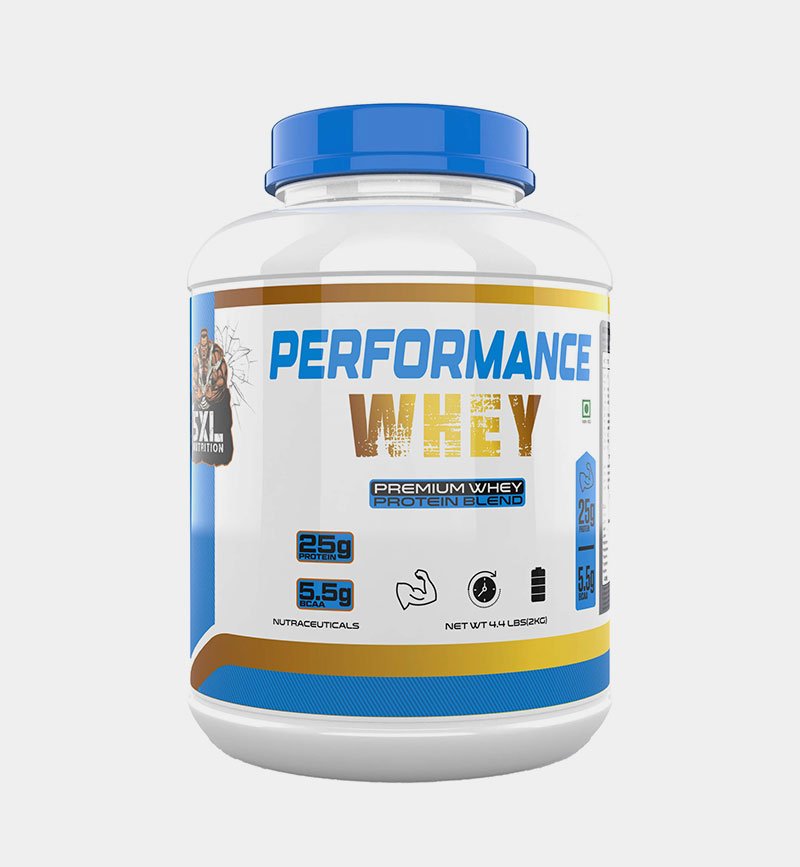
For the athlete who takes daily supplementation seriously, Performance Whey by The 5XL Nutrition is formulated for people who care what’s actually in their protein – not just what’s on the front of the tub.
What it’s built on:
- Quality whey protein with a transparent amino acid profile – no nitrogen spiking
- Natural sweetening – no sucralose or Ace-K
- Sunflower lecithin for smooth mixing without GMO soy additives
- Minimal ingredient philosophy – every ingredient has a purpose; nothing added for visual effect or to inflate numbers
- Designed for daily, year-round use without the gut burden of conventional protein powders
Performance benefits:
- Leucine-rich profile triggers mTOR for post-workout muscle protein synthesis
- Better digestive tolerance from natural ingredients versus synthetic additive-heavy formulas
- No artificial stimulant load – real nutrition, consistently delivered
- A protein you can take every day, year after year, without hesitation about what’s in it
Who it’s built for: Serious gym-goers training 4-6 days per week who take daily nutrition seriously, people who’ve experienced digestive discomfort with conventional protein powders, and athletes making the shift from artificially sweetened proteins toward genuinely clean formulations.
Shop 5XL Nutrition Performance Whey →
How to Use Performance Whey for Maximum Results
Timing:
- Post-workout (primary): 1 serving within 30-60 minutes of training – the most evidence-backed window for muscle protein synthesis
- Morning: A fast-absorbing natural protein is an excellent first-meal protein source when breakfast is light
- Between meals: A clean protein option when whole food isn’t accessible
Stacking:
| Goal | Stack |
| Muscle building | Performance Whey + Creatine + Multivitamin |
| Fat loss / clean nutrition | Performance Whey + Omega-3 + Multivitamin |
| Recovery focus | Performance Whey + Curcumin + Magnesium |
Final Thought
Performance in the gym is built over years, not weeks. The supplements you use daily become part of your body’s nutritional baseline – and what you’re putting into that baseline matters.
A “100% natural” label that means nothing is worse than no claim at all, because it creates false confidence. A genuinely clean formulation. real protein from quality sources, sweetened naturally, mixed cleanly, free from synthetic burden is the foundation serious athletes can build on for the long term.
Read labels. Demand transparency. Choose what you’d take every day for the next five years without hesitation.
FAQs
Q1. What does “100% natural” actually mean on a whey protein label in India?
In India, there is no strict regulatory definition of “natural” for supplement labels. A genuinely natural whey protein should use whey protein as the sole protein source (no nitrogen spiking), sweeten with stevia or monk fruit (not sucralose or Ace-K), use sunflower lecithin (not GMO soy lecithin), use natural flavours and colours, and contain no synthetic preservatives. Always read the full ingredient list – never just the front label claim.
Q2. Is natural whey protein better for long-term daily use?
For short-term muscle building, the difference is not dramatic. But for daily supplementation over years, choosing a cleaner formula with natural sweeteners, no synthetic dyes, and no unnecessary additives reduces the cumulative synthetic compound burden on the body – particularly relevant for gut health and metabolic function over the long term.
Q3. Is stevia safe to use in protein powder every day?
Yes, Stevia (steviol glycosides) is well-established as safe for daily long-term use. It does not affect blood sugar, has no known negative effects on the gut microbiome at typical supplement doses, and is approved as a food ingredient across most global regulatory frameworks including FSSAI in India.
Q4. Can Performance Whey be used for both muscle gain and fat loss?
Yes, The clean macro profile – high protein, controlled carbohydrates and fat – makes it suitable for both phases. For muscle gain, take with a calorie surplus and combine with creatine. For fat loss, use it to hit protein targets within a calorie deficit, preserving lean muscle while body fat reduces.
Q5. What’s the difference between Performance Whey and standard Whey Concentrate?
Beyond the clean and natural formulation philosophy, Performance Whey is positioned for athletes prioritising ingredient quality and long-term digestive tolerance. Standard concentrate emphasises cost-effectiveness and macronutrient density. Both deliver effective protein. The choice depends on how much the clean-label aspect matters for your daily nutrition approach and how your body responds to conventional protein formulas.
Q6. How do I verify my The 5XL Nutrition Performance Whey is genuine?
Every 5XL Nutrition product includes a unique authenticity code. Visit the5xlnutrition.com/verify-product, enter or scan your code, and confirm your product is genuine in under 30 seconds – before you open it.