Is Whey Protein Concentrate Really Worth It? An Honest Answer
Is Whey Protein Concentrate Really Worth It? An Honest, No-Hype Answer
If you’ve ever searched for whey protein, you’ve probably seen three big words everywhere: concentrate, isolate, and hydrolyzed. And naturally, this leads to confusion — especially when prices vary so much.
Many people end up asking:
“Is whey protein concentrate actually worth it?”
“Is it good enough, or should I spend more on isolate?”
Let’s answer this properly, without marketing language and without unrealistic claims.
First Things First: What Is Whey Protein Concentrate?
Whey protein concentrate is the most commonly used form of whey protein in the world.
It is made by filtering whey (a by-product of milk) to remove most fats and carbs, while keeping a high amount of protein along with naturally occurring nutrients.
Typically, whey protein concentrate contains:
- Around 70–80% protein
- Small amounts of carbs and fats
- Natural bioactive compounds
This is important because it means concentrate is not “low quality” — it’s simply less processed than isolate.
Why Whey Protein Concentrate Is So Popular
There’s a reason whey protein concentrate has been used for decades by athletes and gym-goers.
1. It Gets the Job Done
At the end of the day, the main purpose of whey protein is simple:
- Help you meet daily protein needs
- Support muscle recovery
- Improve training consistency
Whey protein concentrate does exactly that.
2. It’s More Affordable for Daily Use
For most people, protein is not a one-time purchase — it’s something you use every single day.
Whey protein concentrate is:
- More budget-friendly
- Easier to maintain long-term
- Practical for beginners and regular gym-goers
Consistency matters more than perfection.
3. It Supports Muscle Recovery Just Fine
Muscle recovery doesn’t require ultra-expensive protein. It requires:
- Enough total protein
- Regular intake
- Good training and sleep
Whey protein concentrate provides all essential amino acids needed for muscle repair and growth.
Does Whey Protein Concentrate Build Muscle?
Yes — when combined with training.
Let’s be very clear here:
- No protein builds muscle without workouts
- No protein works if total diet is poor
But when you lift weights and eat properly, whey protein concentrate supports:
- Muscle protein synthesis
- Recovery between workouts
- Strength progression
Many people build excellent physiques using only whey protein concentrate.
What Whey Protein Concentrate Will NOT Do
Let’s clear some myths.
It won’t magically build muscle
won’t burn fat on its own
It won’t replace real food
It won’t work without consistency
It’s a support tool — not a shortcut.
Who Should Choose Whey Protein Concentrate?
Whey protein concentrate is a great choice if you are:
- A beginner starting gym training
- A regular fitness enthusiast
- Someone on a budget
- Looking for a daily protein supplement
- Not lactose-sensitive
For most people, it offers the best balance of price, quality, and results.
When Whey Protein Concentrate May Not Be Ideal
To be honest, whey protein concentrate isn’t perfect for everyone.
You might want another option if:
- You are highly lactose intolerant
- You are on a strict calorie-cutting phase
- You need extremely fast digestion
In those cases, isolate may make sense — but that doesn’t make concentrate “bad.”
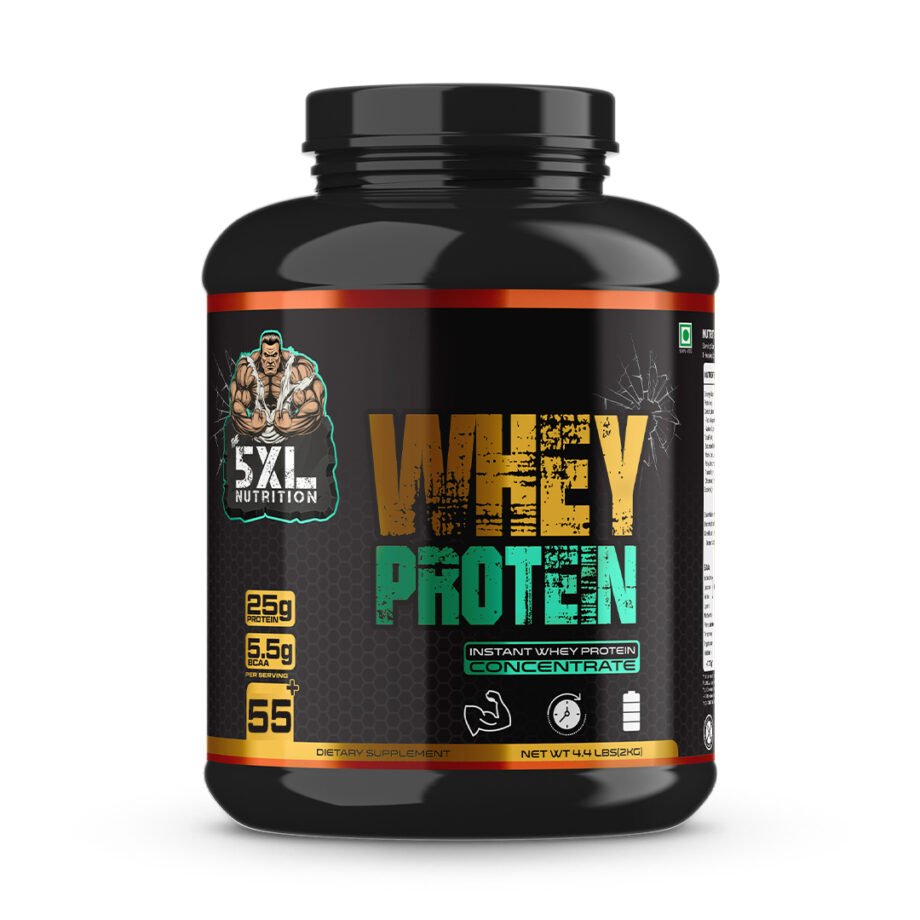
Why The 5XL Nutrition Whey Protein Concentrate Stands Out
Not all whey protein concentrates are equal. Quality depends heavily on the brand.
This is where The 5XL Nutrition Whey Protein Concentrate earns trust.
What Makes It a Solid Choice
- High-quality whey protein concentrate
- Good amino acid profile
- Mixes easily with water or milk
- Suitable for daily use
- Designed for Indian fitness needs
It’s built for people who train consistently and want reliable performance, not marketing hype.

How It Feels When You Use a Good Whey Protein Concentrate
With consistent use, people often notice:
- Better post-workout recovery
- Less muscle soreness
- Improved workout consistency
- Easier time meeting protein goals
It’s not dramatic — it’s gradual and steady. That’s how nutrition should work.
Best Time to Take Whey Protein Concentrate
There’s no strict rule, but common effective options include:
- Post-workout – supports muscle recovery
- Morning – if breakfast is low in protein
- Between meals – to fill protein gaps
What matters most is daily protein intake, not perfect timing.
How Much Whey Protein Concentrate Should You Take?
For most people:
- 1 scoop per day is enough
- Adjust based on diet and body weight
More protein is not always better. Balance matters.
Real-Life User Experiences
Rohit (Beginner)
“I didn’t want to spend too much initially. Whey protein concentrate helped my recovery and I felt stronger within a few weeks.”
Aman (Regular Gym-Goer)
“I’ve tried isolate too, but concentrate works just fine for daily use. Easy on digestion.”
Neeraj (Office Professional)
“Affordable and effective. I can use it consistently without worrying about cost.”
Vikas (Strength Training)
“No fancy claims — just good protein that supports my workouts.”
Frequently Asked Questions
Is whey protein concentrate safe?
Yes, when taken in recommended amounts and as part of a balanced diet.
Does whey protein concentrate cause weight gain?
Only if it increases total calorie intake beyond your needs.
Can beginners use whey protein concentrate?
Absolutely. It’s one of the best options for beginners.
Is isolate better than concentrate?
Not necessarily. Isolate is more processed and more expensive. Concentrate is often enough for most people.
So, Is Whey Protein Concentrate Really Worth It?
Here’s the honest answer:
Yes — for most people, whey protein concentrate is absolutely worth it.
It’s affordable, effective, and reliable. You don’t need the most expensive protein to see results — you need something you can use consistently.
With a trusted option like The 5XL Nutrition Whey Protein Concentrate, you get exactly what most gym-goers need:
- Quality protein
- Good recovery support
- Long-term value
The real results come from training hard, eating well, sleeping enough — and using protein as a smart support, not a miracle solution.