Best Whey Protein for Strength Training in India 2026 – Complete Science-Backed Guide
Strength training has a different nutritional logic from every other form of exercise – and most whey protein advice online is written for bodybuilders, not strength athletes.
If your primary goal is moving heavy weight – squatting, deadlifting, pressing, pulling – your protein requirements, recovery needs, and supplement approach are all specific to the demands of strength training. This guide is written for that goal.
Shop The 5XL Nutrition Protein for Strength Training → Performance Whey, Concentrate, and Isolate built for serious training.
Why Strength Training Has Unique Protein Requirements
Protein’s role in strength training goes significantly deeper than “repair muscle after lifting.”
Myofibrillar growth – the strength adaptation:-
Strength training stimulates two distinct muscle adaptations. Myofibrillar proteins – the contractile proteins that actually generate force – are what make muscle stronger, not just bigger. Heavy training in the 1-5 rep range specifically stimulates myofibrillar protein synthesis. Without adequate protein, the training signal fires but the building materials are absent. Strength adaptation is slower, incomplete, and unsustainable.
Connective tissue repair:-
This mechanism is almost never covered – and it’s critical for strength athletes specifically. Heavy training places extraordinary demands on tendons, ligaments, and fascia. These structures adapt more slowly than muscle (lower blood supply, slower protein turnover) and are the primary limiting factor in how fast a strength athlete can progress safely. Adequate protein – including collagen precursor amino acids like glycine, proline, and lysine – is essential for connective tissue adaptation. Strength athletes who neglect this are disproportionately prone to tendon injuries and plateau periods caused by structural limitations.
Neurological recovery:-
Maximum strength expression is as much neurological as muscular. Tryptophan (an EAA in quality whey protein) is the precursor to serotonin, which plays a central role in fatigue perception and recovery between demanding sessions. Tyrosine (another EAA) is the precursor to dopamine and norepinephrine – the neurotransmitters driving focus and the mental intensity that max-effort training demands. Chronic protein deficiency manifests as reduced training motivation – experienced by strength athletes as the inability to get psyched up for heavy sessions.
How Much Protein Do Strength Athletes Actually Need?
The protein requirement for strength athletes is higher than most people assume.
| Training Phase | Protein Requirement | Notes |
| Building strength (maintenance calories) | 1.6-2.0g per kg | Supports adaptation |
| Strength + muscle building (surplus) | 1.6-1.8g per kg | Calorie surplus aids growth |
| Maintaining strength during cut | 2.0-2.4g per kg | Higher intake preserves muscle |
| Competition preparation | 2.0-2.5g per kg | Maximise muscle retention |
A typical Indian diet provides 40-55g of food protein daily. An 80kg powerlifter in a maintenance phase needs 128-160g daily – meaning a supplement gap of 70-100g per day. This is significantly higher than the casual gym-goer’s requirement and why strength athletes need a structured supplementation approach.
Which Whey Protein Is Best for Strength Training?
For strength building and muscle mass phases: Performance Whey or Concentrate
During phases where strength building is the primary goal at maintenance or surplus calories, you need higher protein per serving with moderate carbohydrates that support glycogen replenishment after heavy sessions, and a complete amino acid profile addressing both myofibrillar and connective tissue protein requirements.
For cutting and weight class management: Isolate
During calorie-restricted phases – common for powerlifters and Olympic weightlifters managing competition weight – isolate’s 90%+ protein purity maximises protein per calorie, near-zero carbs allow precise macronutrient management, and fast absorption supports recovery even when food intake is restricted.
The 5XL Strength Training Protein Range
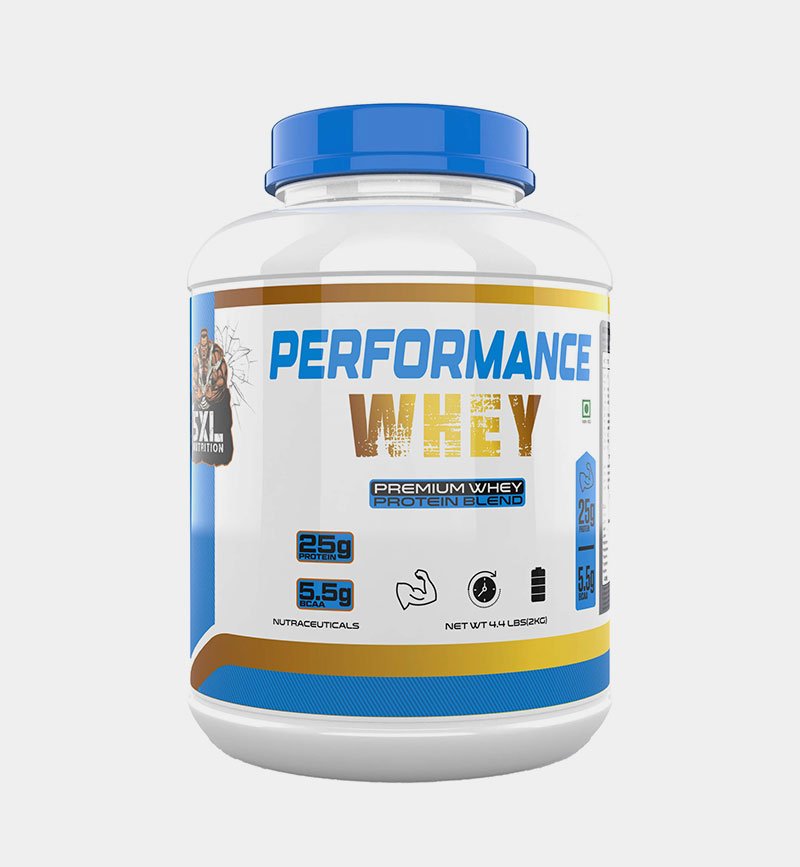
The 5XL Performance Whey – Primary Choice for Strength Athletes
Performance Whey is The 5XL’s most comprehensive protein formula, built for athletes who train consistently at high intensity. It delivers all 9 essential amino acids including leucine (MPS trigger), lysine (collagen synthesis), and methionine (cellular repair) – addressing both muscle and connective tissue requirements simultaneously. Formulated for the higher recovery demands of frequent heavy training, suitable for athletes training 4-6 days per week without the digestive load that would reduce daily compliance.
Best for: Powerlifters, Olympic weightlifters, CrossFit athletes, and anyone whose primary focus is strength with secondary hypertrophy goals.
Buy Performance Whey Protein →
The 5XL Whey Protein Concentrate – Best Value for High Daily Protein Volume
For strength athletes whose daily requirement is 1.8-2.4g/kg, cost efficiency is a real consideration – 2-3 scoops daily over 12 months is a meaningful annual expense. Concentrate provides the best cost-per-gram ratio in The 5XL’s range. At 24g protein per scoop, two scoops post-workout covers a significant portion of the daily requirement efficiently. Natural carbohydrates support glycogen replenishment after heavy sessions.
Best for: Strength athletes in maintenance or bulking phases needing high daily protein volume at sustainable cost.
Buy Whey Protein Concentrate →
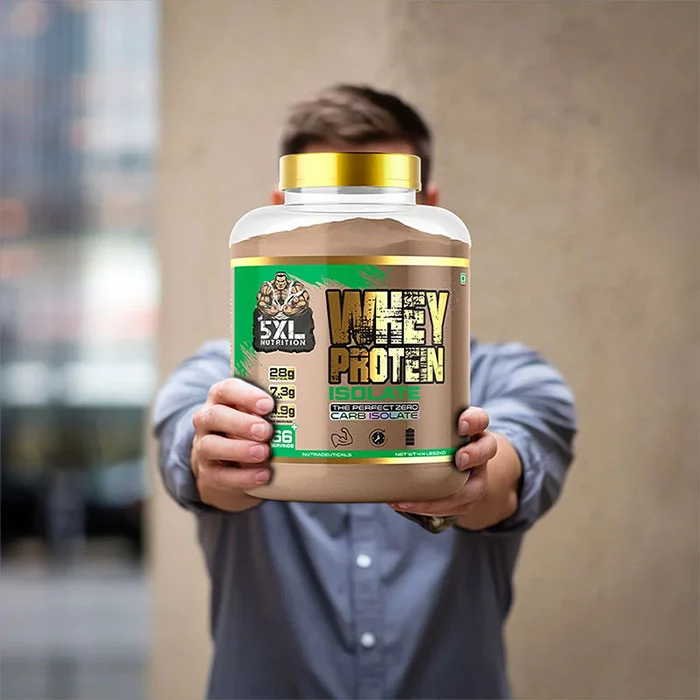
The 5XL Whey Protein Isolate – Best for Competition Preparation
For weight-class sports athletes, making weight while preserving strength is a specific nutritional challenge. Isolate delivers 27g protein per 110 calories with near-zero carbohydrates and very low lactose – the best protein density ratio in the range.
Best for: Athletes managing body weight for competition, anyone in a calorie-restricted strength maintenance phase.
The Complete Strength Training Supplement Stack
Core Strength Stack (Non-Negotiable for Serious Athletes) The 5XL Performance Whey + The 5XL Creatine Monohydrate
The most evidence-backed two-supplement combination in strength sports. Creatine increases phosphocreatine availability, enabling more ATP regeneration, more strength output per set, and faster set-to-set recovery. Whey protein provides the amino acids to build the muscle tissue that creatine’s enhanced training capacity creates. Research on this combination consistently shows 30-50% greater strength gains over 8-12 weeks compared to either supplement alone.
Protocol: Creatine 3-5g daily (any consistent time). Performance Whey 1-2 scoops post-workout.
Advanced Stack (High-Frequency Athletes) Performance Whey + Creatine + EAA
For athletes training 5-6 days per week with multiple heavy sessions, intra-workout EAAs maintain an elevated amino acid pool throughout the session and prevent muscle protein breakdown during extended compound strength work. Particularly valuable for fasted morning training.
Protocol: EAA 8-12g sipped throughout training. Creatine 3-5g pre or post-workout. Performance Whey 1-2 scoops post-workout.
Competition Preparation Stack Whey Isolate + Creatine + EAA
During aggressive calorie restriction before competition: isolate maximises protein at minimum calories, creatine maintains training intensity despite the deficit, and EAAs provide intra-workout anti-catabolism during the physiologically stressed preparation period.
Practical Protein Targets for Strength Athletes
Step 1: Calculate your daily target
| Body Weight | Strength Building | Cutting Phase |
| 70 kg | 112-140g | 140-168g |
| 80 kg | 128-160g | 160-192g |
| 90 kg | 144-180g | 180-216g |
| 100 kg | 160-200g | 200-240g |
Step 2: Estimate food protein 3 large eggs = 18-21g. 150g chicken breast = 45g. 200g paneer = 24-30g. 2 cups dal = 14-18g. Typical Indian meal (rice, dal, sabzi) = 12-18g.
Step 3: Bridge the gap Subtract estimated food protein from your daily target. At 22-27g per scoop, most strength athletes require 1-3 scoops of whey protein daily depending on how protein-rich their food intake is.
Common Mistakes Strength Athletes Make With Protein
Not eating enough total protein for the training load – the most impactful error. Strength athletes training 4+ days per week need 1.8-2.4g/kg. Many eat 0.8-1.2g/kg and wonder why progress is inconsistent.
Concentrating protein in one meal – your body can utilize approximately 30-50g per meal for muscle protein synthesis. Distributing protein across 4-5 meals is significantly more effective than consuming 100g in one sitting.
Ignoring protein on rest days – muscle protein synthesis remains elevated for 24-48 hours after heavy training. Rest days are recovery days, not zero-protein days.
Poor pre-workout meal timing – heavy compound movements require gastric comfort. A large protein-and-fat meal 30 minutes before squatting is a recipe for discomfort. Pre-workout meals should be 1.5-2 hours before training with emphasis on fast-digesting carbohydrates.
Underestimating connective tissue nutrition – muscle adapts faster than tendons. Strength athletes who push volume aggressively without adequate protein – including collagen precursors – are disproportionately prone to tendon problems.
Why The 5XL Nutrition Is the Right Choice for Strength Athletes
Complete amino acid profiles for strength: Performance Whey and Concentrate deliver all 9 essential amino acids including the collagen precursors strength athletes specifically need – not just the leucine-heavy profile sufficient for bodybuilding goals.
Accuracy at high intake volumes: When consuming 2-3 scoops daily, a 15% label discrepancy accumulates to significant under-dosing over weeks. The 5XL’s transparent, accurate labelling ensures your nutrition tracking reflects what you’re actually consuming.
Verified genuine on every purchase: Every The 5XL product can be authenticated at the5xlnutrition.com/verify-product – important for strength athletes who supplement seriously and need certainty about what they’re taking.
Indian-made for Indian athletes: Formulated with Indian training culture and dietary patterns in mind, not adapted from a foreign market product.
Final Verdict
Strength training requires more protein than most people take, better-distributed protein than most people manage, and more complete protein than most Indian diets provide.
The best whey protein for strength training delivers a high, complete essential amino acid profile, honest accurate labelling for reliable tracking at high daily intake volumes, recovery formulation matched to frequent heavy training, and verified authenticity on every purchase.
The 5XL Performance Whey is the primary recommendation for strength athletes. 5XL Concentrate for those optimising cost at high daily volumes. The 5XL Isolate for competition preparation and cutting phases. Stack all three options with The 5XL Creatine Monohydrate for the most impactful two-supplement combination in strength sports.
The weights don’t care what brand is on your tub. Your results do care about what’s inside it.
FAQ
Q: Is whey protein better than food protein for strength training?
Whey isn’t better than food protein – it’s more convenient and faster-absorbing. The post-workout window requires rapidly available amino acids that whey delivers more efficiently than whole food. Outside this window, high-quality food protein (eggs, chicken, paneer, curd) is equally effective and preferable for its nutritional complexity.
Q: How much protein can my body use from one scoop of whey?
Research suggests approximately 25-40g per meal can be effectively utilised for muscle protein synthesis. A 1-1.5 scoop serving of The 5XL Performance Whey fits within this range optimally.
Q: Should I take creatine and whey protein at the same time?
Yes – mixing creatine into your post-workout protein shake is the most convenient and equally effective approach. The carbohydrates in some protein formulas may marginally enhance creatine uptake.
Q: Is whey protein appropriate for natural strength athletes?
Absolutely. Whey protein is dairy-derived food nutrition with no connection to performance-enhancing drugs. It is appropriate and beneficial for natural athletes at all levels and in all federations.
Q: How long before I see strength improvements from adding protein supplementation?
If your diet was previously protein-deficient, improvements in recovery quality are often felt within 2-3 weeks. Measurable strength gains from improved recovery typically become apparent within 4-8 weeks of consistent adequate protein intake.
Q: Can I use whey protein for powerlifting or strongman specifically?
Yes, Protein requirements for powerlifting and strongman athletes are among the highest in strength sports. Performance Whey or Concentrate at 2-3 scoops daily, combined with creatine, forms an evidence-based core supplement protocol for both sports.
Q: Which 5XL protein is best for an athlete managing competition weight?
Whey Protein Isolate – maximum protein at minimum calories, near-zero carbohydrates for precise macronutrient management, and very low lactose to reduce digestive load during the physiologically stressed competition preparation period.