Whey Protein Isolate: The Cleanest Form of Protein for Muscle Gain in 2026
When it comes to building lean muscle, recovering faster, and keeping your nutrition tight, not all protein powders are created equal. Whey Protein Isolate (WPI) sits at the top of the category – and for good reason. It’s purer, faster-absorbing, and better suited to serious fitness goals than most alternatives on the market.
Whether you’re cutting body fat, building lean mass, or simply trying to hit your daily protein targets without unnecessary calories, this guide covers everything you need to know about whey isolate in 2026.
What Is Whey Protein Isolate?
Whey protein is derived from milk – specifically, it’s the liquid byproduct separated during the cheese-making process. That liquid is then processed and dried into powder form. But not all whey protein goes through the same level of refinement.
Whey Protein Isolate is the most purified form available, containing over 90% protein by weight. To reach that level of purity, manufacturers put standard whey concentrate through an additional filtration process – either microfiltration or ion exchange – which strips out the majority of fat, carbohydrates, and lactose while leaving the protein molecules intact and undamaged.
The result is a powder that is leaner, cleaner, and faster-acting than concentrate, with very little else getting in the way.
How Whey Isolate Is Made
The two main production methods – microfiltration and ion exchange – both achieve the same goal of isolating protein from other milk components, but do so slightly differently.
Microfiltration uses fine ceramic filters to physically separate protein from fat and lactose at low temperatures, preserving the natural structure of the protein and its bioactive compounds.
Ion exchange uses electrical charge differences to isolate protein molecules, typically yielding an even higher protein percentage but potentially removing some of the smaller immune-supporting proteins found in whey.
Both methods produce a high-quality product. What matters most is the finished profile: high protein, minimal fat, minimal lactose, and fast digestibility.
Key Benefits of Whey Protein Isolate
High protein per serving A standard scoop of whey isolate typically delivers 25-27g of protein with very little else attached. That clean protein density makes it one of the most efficient ways to support muscle repair and growth.
Suitable for lactose-sensitive individuals Most whey isolates contain less than 1g of lactose per serving – a fraction of what you’d find in concentrate. For people who experience bloating or digestive discomfort with dairy-based proteins, isolate is usually well-tolerated.
Fast absorption Because of its high purity and low molecular complexity, whey isolate absorbs more rapidly than concentrate. This makes it particularly effective immediately after training, when your muscles are primed to take up amino acids and begin the repair process.
Supports lean muscle without excess calories With negligible fat, minimal carbohydrates, and no added sugar, isolate lets you maximise protein intake without inadvertently adding unwanted calories. This is especially valuable during a cutting phase or when you’re tracking macros closely.
Keeps you fuller for longer Despite its low calorie count, the high protein content of isolate is genuinely satiating. It helps curb hunger between meals, making it easier to stay consistent with your nutrition goals without reaching for less wholesome options.
Whey Isolate vs. Whey Concentrate
Both are effective – but they serve slightly different purposes depending on where you are in your fitness journey.
| Feature | Whey Isolate | Whey Concentrate |
| Protein content | 90%+ | 70-80% |
| Lactose | Minimal | Higher |
| Fat content | Very low | Moderate |
| Digestion speed | Fast | Moderate |
| Best suited for | Lean gain, cutting, lactose sensitivity | Beginners, general fitness, bulking |
| Price point | Higher | More budget-friendly |
The bottom line: Concentrate is a perfectly solid choice for beginners or those on a tighter budget. Isolate is the better option for anyone with intermediate to advanced goals, those managing lactose intolerance, or people in a fat loss phase who need every calorie to count.
When and How to Take Whey Protein Isolate
Timing
The most impactful time to consume whey isolate is within 30 minutes of finishing your workout. During this window, muscle protein synthesis is elevated and your muscles are primed to absorb amino acids efficiently. That said, whey isolate is also useful first thing in the morning (to break the overnight fast and prevent muscle breakdown) or as a mid-day snack between meals.
Preparation
Mix one scoop (approximately 30g) with 200-250ml of cold water or milk. Shake well and consume immediately. Mixing with water keeps calories minimal; milk adds extra protein and creaminess if you’re not in a strict cutting phase.
Who Is Whey Isolate Right For?
Whey Protein Isolate is particularly well-suited for:
- Gym-goers focused on building lean muscle without gaining body fat
- People with lactose intolerance or mild dairy sensitivity
- Those in a fat loss or body recomposition phase
- Athletes who need rapid post-workout recovery
- Fitness-conscious individuals tracking macros with precision
- Anyone who wants a clean, additive-free protein supplement
If you’re a complete beginner on a limited budget, concentrate can be a sensible starting point. But if performance and purity matter to you, isolate is the upgrade worth making.
Common Mistakes to Avoid
Taking too much. One to two scoops per day is sufficient for the vast majority of people. Protein beyond what your body can use doesn’t build more muscle – it just adds unnecessary calories or gets excreted. More isn’t always better.
Using it as a meal replacement. Whey isolate is a supplement – it’s designed to complement your diet, not replace whole meals. Real food provides fibre, vitamins, minerals, and micronutrients that no protein powder replicates. Keep your meals intact and use isolate to fill the gaps.
Ignoring workout nutrition overall. Whey isolate delivers the best results when timed thoughtfully around training and paired with consistent, balanced eating. A great protein powder can’t compensate for poor overall nutrition.
Skimping on hydration. Higher protein intake increases your body’s demand for water. Drink plenty throughout the day, especially on training days.
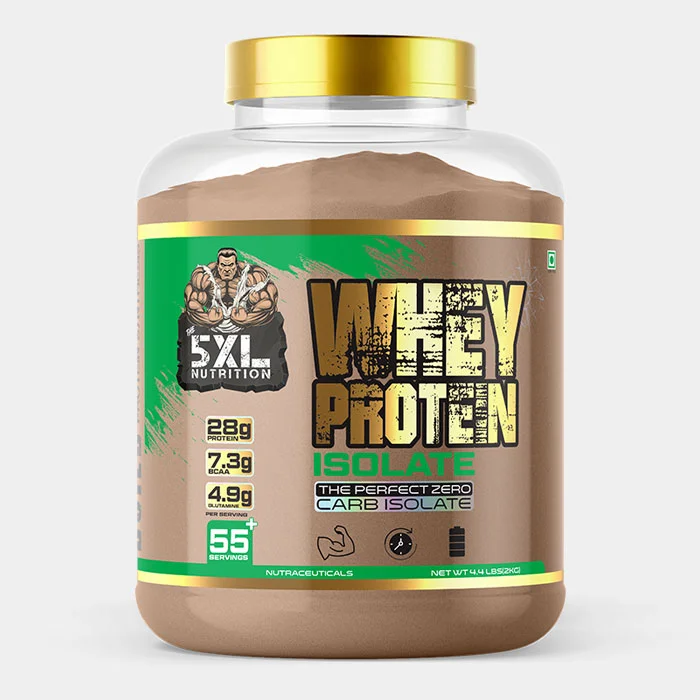
Why The 5XL Nutrition Whey Protein Isolate
5XL Nutrition’s Whey Protein Isolate is formulated for people who take their nutrition seriously. Each serving delivers:
- 27g of protein per scoop
- Zero added sugar
- Zero fat
- Enhanced with digestive enzymes for better absorption and comfort
- No artificial fillers or unnecessary additives
It’s designed to work equally well during a lean bulk or a cutting phase – giving your muscles exactly what they need to recover and grow, without anything they don’t.
FAQ
Can beginners use whey isolate?
Yes, absolutely. Whey isolate is easy to digest and effective at any fitness level. Beginners may sometimes opt for concentrate simply because it’s more budget-friendly, but there’s no reason isolate can’t be your starting point if it fits your budget and goals.
Is whey isolate safe to take every day?
Yes. Up to two scoops per day is considered safe for healthy adults when combined with a balanced diet and adequate hydration. As with any supplement, stick to recommended serving sizes rather than assuming more is better.
Is whey isolate good for fat loss?
It’s one of the best tools for it. The high protein content supports muscle preservation during a caloric deficit – which is critical, since losing lean muscle slows your metabolism. The low calorie profile means you can hit your protein targets without eating into your calorie budget.
Can women use whey isolate?
Absolutely. Whey isolate is just as beneficial for women as it is for men. It supports lean muscle tone, aids recovery after training, and helps meet daily protein needs. It won’t cause bulking – building significant muscle mass requires sustained heavy training and a caloric surplus, not simply taking a protein supplement.
How is isolate different from concentrate?
The main difference is purity. Isolate undergoes additional filtration to remove most fat, carbohydrates, and lactose, resulting in a protein content of 90% or above. Concentrate sits at 70-80% protein and retains more of the naturally occurring fats and sugars from milk. Isolate absorbs faster and is better tolerated by those with lactose sensitivity.
Does whey isolate cause bloating?
For most people, no. One of the main reasons people switch from concentrate to isolate is precisely to reduce digestive discomfort. The near-absence of lactose and the addition of digestive enzymes in quality formulas like 5XL’s means bloating is rarely an issue. If you do experience any discomfort, try mixing with water instead of milk and ensure you’re drinking enough fluids throughout the day.
Final Thoughts
Whey Protein Isolate remains one of the most effective and versatile supplements available to anyone serious about their fitness. Its exceptional purity, rapid absorption, and minimal allergen profile make it the go-to choice for lean muscle building, efficient recovery, and clean, precise nutrition.
In a market flooded with products packed with fillers, excess sugar, and misleading labels, a quality isolate cuts through the noise. Build your diet around real, whole food – and let whey isolate handle the rest.
Ready to upgrade your protein? Try 5XL Nutrition’s Whey Protein Isolate – clean, effective, and built for real results.